Security Center
 ATM & Branches
ECONOMY
Robust performance by the non-oil sector provided strong grounds for optimism, leading to an uptick in FDI inflows and business confidence.
Find out more


Have questions about SAB banking services? Let us help you with these frequently asked questions.
FAQS
Our friendly Customer Support team are on hand to help with any queries you have. We're here to help!
Contact Us
Robust performance by the non-oil sector provided strong grounds for optimism, leading to an uptick in FDI inflows and business confidence.
Find out more
The introduction of a foreign ownership law will widen the sector’s customer base and generate revenue for the government.
Find out more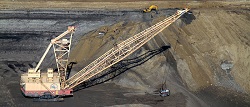
Authorities have steadily laid the groundwork for developing the mining sector as a critical part of the country’s industrial strength, piquing investors’ interest.
Find out more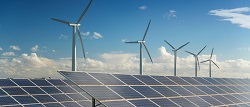
The country stays the course on diversifying its energy mix, boostig energy eficiency, and advancing its renewable energy infrastructure.
Find out more
The kingdom has become a prime destination for venture investments, giving start-ups the leg-up to advance from seed to growth stages.
Find out more

IN THIS EDITION
Saudi Arabia is advancing a major industrial transformation by converting more than 4,000 factories into “smart” facilities equipped with artificial intelligence (AI), automation, and 3D-printing capabilities – a move announced at the recent Saudi Forum for the Fourth Industrial Revolution and aligned with the kingdom’s Vision 2030.
The initiative, spearheaded by the Ministry of Industry and Mineral Resources in partnership with the Centre for the Fourth Industrial Revolution Saudi Arabia (C4IR Saudi Arabia), is designed to reposition the kingdom from a recipient of global industrial trends to a proactive leader of “future industries”.
The aim is to build new industrial capacities geared toward emerging technologies, develop digital infrastructure, cultivate domestic talent, and boost regulatory frameworks to help attract investment and enable large-scale adoption of world-class industrial technology. The programme falls under a national “Future Factories" scheme that targets increased productivity, energy-efficiency and localisation of industrial value chains.
AI is projected to contribute approximately 12% to the country’s gross domestic product by 2030, according to Borge Brende, World Economic Forum (WEF) president, noting that Saudi Arabia has established its reputation as a global leader in innovation and technology.
Key sectors expected to benefit from this initiative are manufacturing, digital logistics, and smart production systems.
The upgrade of 4,000 factories is explicitly characterised as “AI-powered smart facilities”. The ambition also reflects the kingdom’s broader push to anchor AI at of a national AI-champion company. the heart of its economic diversification efforts, for example, through the launch .
Overall, this large-scale factory modernisation signals a shift toward knowledge-intensive industrial production in Saudi Arabia. The success of the initiative will depend on delivering the necessary skills, digital platforms and investment flows- and on how effectively it can translate upgraded facilities into sustained productivity gains and globally competitive output.

You are about to leave this site. You are being redirected to an external site. Would you like to leave this site?




© SAB, Saudi Arabia. All Rights Reserved, 2025
Saudi Awwal Bank, a listed joint stock company, incorporated in the Kingdom of Saudi Arabia, with paid in capital of SAR 20,547,945,220, commercial registration certificate 1010025779, unified number 7000018668, Mailing Address: P.O. Box 9084, Riyadh 11413. National Address: 7383 King Fahad Branch Rd, 2338 Al Yasmeen Dist., 13325 Riyadh, Kingdom of Saudi Arabia, Tel. +966 11 4050677, www.sab.com, licensed pursuant to the Council of Ministers Resolution No. 198 dated 06/02/1398H and Royal Decree No. M/4 dated 12/08/1398H, and regulated and supervised by the Saudi Central Bank.