
 Security Center
 ATM & Branches
ECONOMY
|


How can we help?
Filter
Looks like we don’t have any matches for
Try a different search term or check out some of our suggestions below.

Frequently Asked Questions
Have questions about SAB banking services? Let us help you with these frequently asked questions.
FAQS
Customer Service
Our friendly Customer Support team are on hand to help with any queries you have. We're here to help!
Contact Us


SAUDI RIDES HIGH AS INDICATORS POINT TO A RESILIENT ECONOMY
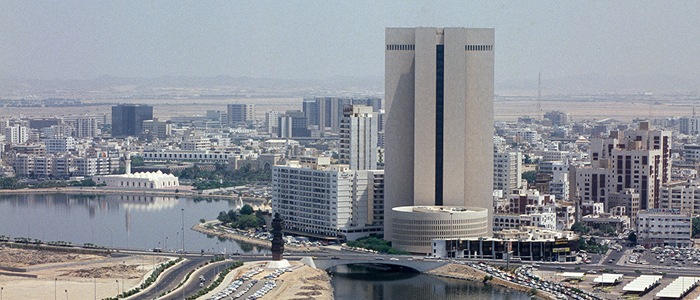
Saudi Arabia’s economy expanded by 5% in the third quarter of 2025 compared with the same period last year, according to flash estimates from the General Authority for Statistics (GASTAT), as both oil and non-oil activities recorded strong gains
Oil output rose 8.2%, marking the fastest growth among major sectors, while non-oil activity increased 4.5% and government services jumped 1.8% from a year earlier. Non-oil sectors remained the largest driver of overall growth, contributing 2.6 percentage points (pp) to the quarterly expansion, followed by oil activity at 2.0pp, government activity and net taxes at 0.2pp each.
On a quarter-on-quarter basis, seasonally adjusted GDP soared 1.4%, driven by a 3.1% rise in oil output. Non-oil and government sectors also edged higher, by 0.6% and 0.7%, respectively. Oil activity accounted for 0.8pp of the sequential growth, while non-oil sectors added 0.4pp, as government activity and net taxes each contributed 0.1pp.
The kingdom’s non-oil private sector recorded one of its strongest performances in over a decade in October, as business activity and hiring accelerated in response to robust demand and improving supply conditions.
The country’s unemployment rate among nationals rose to 6.8% in the second quarter, up from 6.3% in the previous quarter, though it remains below the Vision 2030 target of 7%, underscoring continued progress toward long-term labour market goals. The overall jobless rate, which includes expatriates, also increased slightly to 3.2% from 2.8% in the first quarter.
Meanwhile, consumer inflation rose 2.2% in September 2025, compared with 1.5% a year earlier. The rise was mainly driven by higher costs for housing, water, electricity, gas, and other fuels – up 5.2% year on year – alongside modest increases in restaurant and accommodation services (1.5%), and food and beverages (1.1%).
In addition, non-oil exports, including re-exports, rose 5.5% in August compared to the same period last year, while national non-oil exports, excluding re-exports, fell 6.7%. Oil exports rose 7% during the period, raising the percentage of oil exports out of total exports to 70.5% (from 70.2% during the same period in 2024). Merchandise trade balance surplus increased 4.1% over the period.
FDI SURGES
The value of foreign direct investment (FDI) inflows into the kingdom in 2024 saw a 24.2% increase from the previous year, highlighting strong investor confidence, according to latest government data. As a result, gross fixed capital formation achieved historic record in 2024, exceeding SAR 1.3 trillion, surpassing its target by 38%. Private-sector investment (non-governmental, non-oil) represented around 76% of the total, underscoring the dynamism of the local business environment, government data shows.
Around 40% of the country’s budget and expenditures are now financed by non-oil revenues, and notably, 90% of FDI in the country is from this sector, according to Khalid Al-Falih, minister of investment. The substantial progress and transformation were achieved across diverse, high-potential sectors, including advanced manufacturing, technology, tourism, entrepreneurship, deep technologies, and venture capital.
The non-oil economy has grown by 5%, and within the past two years, it has yielded numerous new and promising investment opportunities, specifically artificial intelligence and the acceleration of digital transformation
STRONG BUSINESS UPTURN
The seasonally adjusted S&P Purchasing Managers’ Index (PMI) rose sharply to 60.2 in October from 57.8 in September, signalling a marked strengthening in operating conditions. It was the second-highest reading since 2014, underlining the resilience of the non-oil economy amid ongoing diversification efforts.
Nearly half of surveyed firms reported stronger sales, attributing the increase to firmer domestic demand, a growing customer base, and higher levels of foreign investment. The pace of new business growth quickened for the third month in a row, feeding through into higher output and a sharp rise in employment.
Hiring momentum was particularly notable, with job creation reaching its fastest growth since late 2009 as firms expanded capacity to meet rising workloads. Companies also increased purchasing and inventory accumulation.
The input cost environment, however, showed renewed pressure. Rising wages and higher import costs pushed overall input inflation to its steepest level since early 2023. Firms passed some of these increases on to customers, lifting output prices at the fastest pace in more than two years.
“Business activity expectations among non-oil firms remained positive in October, though confidence was slightly lower than in September,” the S&P PMI report noted. “Strong market demand, ongoing project work, and government investment initiatives were cited as key drivers of optimism.

HOUSING
The introduction of a foreign ownership law will widen the sector’s customer base and generate revenue for the government.
MINING
Authorities have steadily laid the groundwork for developing the mining sector as a critical part of the country’s industrial strength, piquing investors’ interest.
RENEWABLE ENERGY
The country stays the course on diversifying its energy mix, boostig energy eficiency, and advancing its renewable energy infrastructure.
SME
The kingdom has become a prime destination for venture investments, giving start-ups the leg-up to advance from seed to growth stages.

Your are now leaving this site
Your are now leaving this site
You are about to leave this site. You are being redirected to an external site. Would you like to leave this site?










© SAB, Saudi Arabia. All Rights Reserved, 2025
Saudi Awwal Bank, a listed joint stock company, incorporated in the Kingdom of Saudi Arabia, with paid in capital of SAR 20,547,945,220, commercial registration certificate 1010025779, unified number 7000018668, Mailing Address: P.O. Box 9084, Riyadh 11413. National Address: 7383 King Fahad Branch Rd, 2338 Al Yasmeen Dist., 13325 Riyadh, Kingdom of Saudi Arabia, Tel. +966 11 4050677, www.sab.com, licensed pursuant to the Council of Ministers Resolution No. 198 dated 06/02/1398H and Royal Decree No. M/4 dated 12/08/1398H, and regulated and supervised by the Saudi Central Bank.