
 Security Center
 ATM & Branches
HOUSING
|


How can we help?
Filter
Looks like we don’t have any matches for
Try a different search term or check out some of our suggestions below.

Frequently Asked Questions
Have questions about SAB banking services? Let us help you with these frequently asked questions.
FAQS
Customer Service
Our friendly Customer Support team are on hand to help with any queries you have. We're here to help!
Contact Us


FRESH LEGISLATION TO BOLSTER SAUDI PROPERTY MARKET
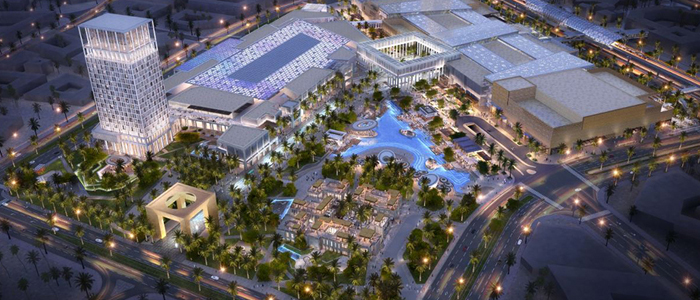
Since its inception in 2018, the Saudi Housing Program has remained one of the key pillars supporting Vision 2030. By the end of 2024, more than 850,000 housing units had been delivered, pushing homeownership among Saudi households to 65.4%, exceeding the annual target of 64%. This target is expected to rise to 70% by 2030.
Both private, public, and non-profit actors have helped surpass that target. Their combined contributions beat expectations, generating USD 2.2 billion in 2024 against a target of USD 1.7 billion, according to the Housing Program’s annual report for 2024.
“This reflects the agility of the housing ecosystem in responding to the Vision’s ambitions and its role in advancing the housing sector,” the report noted. “Nevertheless, achieving this indicator remains closely tied to the real estate environment and the potential shifts and challenges that may occur within the market.”
Overall, the rising homeownership rate and expanding investment base underscored the kingdom’s ongoing progress in providing suitable, high-quality housing for its citizens – an essential milestone in realising the broader ambitions of Vision 2030.
The annual report notes that 1.3 million Saudi families benefitted from the “Sakani” initiative by the end of 2024. In addition, more than 850,000 residential land plots have been offered for housing cumula- tively until 2024, while 122,000 Saudi families benefitted from housing support services during the same year. In addition, more than 759,000 low-income families have obtained housing financing, while the volume of new residential mortgage financing provided to individuals by banks in 2024 stood at SAR 91 billion
HOUSING PROSPECTS
The country’s real estate market is on a steady uptrend, rising from USD 68.52 billion in 2024 to a projected USD 111.77 billion by 2030, an 8.86% compounded annual growth rate.
“Programs such as Sakani have encouraged developers towards cost-efficient formats, including modular and prefeb," according to Chestertons, a real estate market consultancy. “The ministry notes more than 11,000 development projects across 300+ municipalities, with the strongest traction in Riyadh, Jeddah and Dammam.”
NEW FOREIGN OWNERSHIP LAW
The kingdom introduced the updated Law of Real Estate Ownership by Non-Saudis, which is expected to provide individuals and companies, both within and outside the country, with the opportunity to own and invest in one of the region's most promising real estate markets.
The law, set to come into effect in 2026, is anticipated to further uplift the sector, attract substantial foreign direct investment, and unlock new avenues for development and economic diversification across the country.
“Over the past five years, more than 20 real estate legislations have been issued to govern the real estate sector, protect the rights of all parties involved, and stimulate local and international investment,” according to the Real Estate General Authority (REGA).
The updated Law of Real Estate Ownership by Non-Saudis represents a well-considered regulatory step to achieve its investment objectives.
“Non-Saudis” include those without Saudi citizenship, in addition to foreign legal entities, foreign companies, non-profit organisations, and other foreign entities.
The new law aims to attract foreign direct investment (FDI) into the Saudi real estate market, retain global talent and skilled professionals by facilitating their stability in the kingdom. It also aims to boost the real estate sector’s contribution to national gross domestic product, and promote sustainable economic growth and income diversification.
“The law adopts a designated-zone model for foreign real estate ownership,” according to law firm White & Case. The Council of Ministers, in coordination with the REGA and other bodies, will identify specific geographic zones where non-Saudis are permitted to acquire property or property rights.
The move comes as the Saudi capital is in the midst of strong acceleration. In Riyadh, demand for residential properties is projected to remain robust, supported by population growth, economic expansion, and government initiatives promoting homeownership
Much of the upcoming supply is being delivered through large-scale, master-planned communities that emphasise integrated “community living” over standalone developments – a trend that continues to shape urban planning in the capital. Developers are expected to respond by expanding apartment offerings that include enhanced facilities such as gyms, recreational areas, and ample parking, further elevating the standard of modern urban living in Riyadh, according to Jones Lang LaSalle, a real estate consultancy.
Looking ahead, the success of new developments across the country will be bolstered by amenity-rich environments that provide diverse community and recreational spaces, green areas, and parks.

ECONOMY
Robust performance by the non-oil sector provided strong grounds for optimism, leading to an uptick in FDI inflows and business confidence.
MINING
Authorities have steadily laid the groundwork for developing the mining sector as a critical part of the country’s industrial strength, piquing investors’ interest.
RENEWABLE ENERGY
The country stays the course on diversifying its energy mix, boostig energy eficiency, and advancing its renewable energy infrastructure.
SME
The kingdom has become a prime destination for venture investments, giving start-ups the leg-up to advance from seed to growth stages.

Your are now leaving this site
Your are now leaving this site
You are about to leave this site. You are being redirected to an external site. Would you like to leave this site?










© SAB, Saudi Arabia. All Rights Reserved, 2025
Saudi Awwal Bank, a listed joint stock company, incorporated in the Kingdom of Saudi Arabia, with paid in capital of SAR 20,547,945,220, commercial registration certificate 1010025779, unified number 7000018668, Mailing Address: P.O. Box 9084, Riyadh 11413. National Address: 7383 King Fahad Branch Rd, 2338 Al Yasmeen Dist., 13325 Riyadh, Kingdom of Saudi Arabia, Tel. +966 11 4050677, www.sab.com, licensed pursuant to the Council of Ministers Resolution No. 198 dated 06/02/1398H and Royal Decree No. M/4 dated 12/08/1398H, and regulated and supervised by the Saudi Central Bank.