
 Security Center
 ATM & Branches
RENEWABLE ENERGY
|


How can we help?
Filter
Looks like we don’t have any matches for
Try a different search term or check out some of our suggestions below.

Frequently Asked Questions
Have questions about SAB banking services? Let us help you with these frequently asked questions.
FAQS
Customer Service
Our friendly Customer Support team are on hand to help with any queries you have. We're here to help!
Contact Us


SAUDI EXPANDS ITS CLEAN ENERGY PORTFOLIO WITH NEW PROJECTS
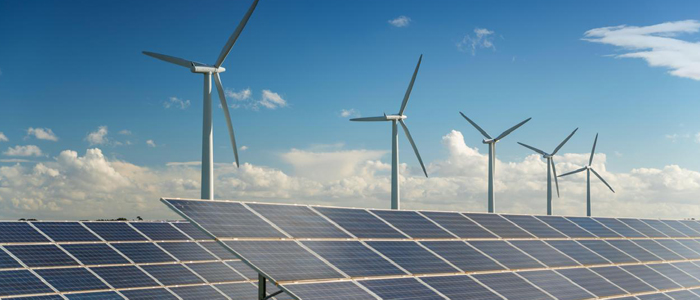
Saudi Arabia expanded its renewable energy portfolio with the awarding of five new renewable energy projects.
Under the sixth phase of its National Renewable Energy Program, which was overseen by the Ministry of Energy, the projects – one wind and four solar – will add 4,500 megawatts (MW) of clean electricity generation capacity with total investments exceeding SAR 9 billion.
The projects are implemented by the Saudi Power Procurement Company, which manages predevelopment studies, oversees tenders, and signs long-term power purchase agreements (PPA) with developers. The company plays a key role in enabling the kingdom’s renewable transition by ensuring bankable project structures and transparent competitive bidding processes.
The highlight of the awards was the Dawadmi Wind Energy Project in Riyadh Province, which set a new global record for the lowest levelised cost of electricity (LCOE) for wind power at 1.33803 US cents per kilowatt-hour (5.01760 halalas/kWh). The 1,500-MW facility underscores Saudi Arabia's rapid progress in achieving world-leading cost efficiencies in renewable energy production.
Complementing this is the Najran Solar Energy Project, with a capacity of 1,400 MW and an LCOE of 1.09682 US cents per kWh (4.11307halalas/kWh), marking the world’s second-lowest recorded cost for solar generation. The previous benchmark, also set in the kingdom by the Shuaiba 1 Solar Project, remains the global record holder.
Three additional solar photovoltaic (PV) plants have also been awarded as part of this phase, including Ad Darb Solar PV IPP in the Jazan province, boasting 600 MW capacity, with an LCOE of 1.36070 US cents/kWh (5.10262 halalas/kWh). Samtah Solar PV IPP, also in Jaza also had 600 MW capacity, with an LCOE of 1.48678 US cents/kWh (5.57544 halalas/kWh). Finally, As Sufun Solar PV IPP in Hail will be built with a 400-MW capacity, with an LCOE of 1.50686 US cents/kWh (5.65074 halalas/kWh).
DIVERSIFYING THE ENERGY MIX
Collectively, these projects reinforce Saudi Arabia’s position as a global leader in driving renewable energy deployment at record-low costs. The consistent achievement of competitive LCOEs reflects the success of the kingdom’s project development framework, which combines robust financing models, strong regulatory oversight, and an attractive investment environment.
By the end of 2025, Saudi Arabia expects to have tendered a total renewable energy capacity of 64 gigawatts (GW). With the signing of the round six projects, the total awarded renewable capacity will reach 43.2 GW, of which 12.3 GW is already connected to the national grid.
These developments are central to Saudi Arabia’s broader strategy to diversify its energy mix, reduce dependence on fossil fuels, and meet its Vision 2030 sustainability targets. The combination of large-scale project deployment and record-breaking cost competitiveness highlights the kingdom’s emergence as one of the fastest-growing renewable energy markets globally.
GREENING THE GRID
Renewable energy is also playing a key role in Saudi Electricity Company’s (SEC) growth and ability to meet the country’s rising demand for power. By the end of the third quarter of 2025, grid-connected renewable energy exceeded 12.3 GW, while 8 gigawatt-hour (GWh) of battery energy storage systems were commissioned and connected. Another 14 GWh are under development for completion next year, strengthening grid reliability and renewable integration, according to the SEC.
The company announced that the SEC–EDF Energy Solutions consortium won the 600 MW Samtah PV project (PPA value at SAR 1.4 billion), the first large-scale solar project it developed, marking a major step in diversifying its generation mix and progressing toward net-zero by 2050. SEC also signed a SAR 12.8 billion PPA for the Riyadh Combined Cycle Power Plant plants and began converting liquid fuel to natural gas at the rabigh-2 plant (2,800 MW) to boots efficieny and reduce emissions.
Meanwhile, the Public Investment Fund (PIF) and ACWA Power signed a memorandum of understanding (MoU) in November to explore opportunities to develop power and water infrastructure for PIF’s local real estate portfolio companies. The MoU is part of PIF’s infrastructure strategy initiative to foster partnerships with local and international private sector developers and investors. It also aligns with the strategy to advance clean and renewable energy and water infrastructure.
In addition, Saudi Arabia is investing in boosting energy efficiency. The country has managed to cut the energy needed for desalination by nearly 50% and achieved the world's lowest production costs. The massive volume is delivered through a monumental infrastructure, with pipelines running over 19,000 kilometres and reaching heights of 3,000 metres, covering more than 82% of all populated areas.
The Ministry of Environment, Water and Agriculture has signed a total of 25 contracts with private partners for desalination, transport, and reuse projects have attracted investments exceeding SAR 104 billion. Long-term targets include cutting water production costs by 50% and reducing non-renewable groundwater use by a massive 90% by 2035.

ECONOMY
Robust performance by the non-oil sector provided strong grounds for optimism, leading to an uptick in FDI inflows and business confidence.
HOUSING
The introduction of a foreign ownership law will widen the sector’s customer base and generate revenue for the government.
MINING
Authorities have steadily laid the groundwork for developing the mining sector as a critical part of the country’s industrial strength, piquing investors’ interest.
SME
The kingdom has become a prime destination for venture investments, giving start-ups the leg-up to advance from seed to growth stages.

Your are now leaving this site
Your are now leaving this site
You are about to leave this site. You are being redirected to an external site. Would you like to leave this site?










© SAB, Saudi Arabia. All Rights Reserved, 2025
Saudi Awwal Bank, a listed joint stock company, incorporated in the Kingdom of Saudi Arabia, with paid in capital of SAR 20,547,945,220, commercial registration certificate 1010025779, unified number 7000018668, Mailing Address: P.O. Box 9084, Riyadh 11413. National Address: 7383 King Fahad Branch Rd, 2338 Al Yasmeen Dist., 13325 Riyadh, Kingdom of Saudi Arabia, Tel. +966 11 4050677, www.sab.com, licensed pursuant to the Council of Ministers Resolution No. 198 dated 06/02/1398H and Royal Decree No. M/4 dated 12/08/1398H, and regulated and supervised by the Saudi Central Bank.