
 Security Center
 ATM & Branches
ECONOMY
|


How can we help?
Filter
Looks like we don’t have any matches for
Try a different search term or check out some of our suggestions below.

Frequently Asked Questions
Have questions about SAB banking services? Let us help you with these frequently asked questions.
FAQS
Customer Service
Our friendly Customer Support team are on hand to help with any queries you have. We're here to help!
Contact Us


SAUDI ECONOMY CONTINUES TO GAIN MOMENTUM AS GDP GROWS
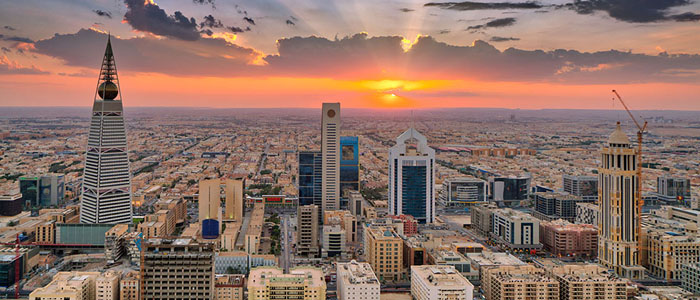
Real GDP in Saudi Arabia expanded by 4.5% in 2025 compared with the previous year, according to preliminary estimates released by the General Authority for Statistics (GASTAT). The growth reflects broad-based increases across major economic segments, underpinned by both oil and non-oil activities.
Real GDP grew by 4.9% year on year in the fourth quarter of 2025, continuing the trend of economic expansion observed throughout the year. A major contributor to this quarterly growth was the oil sector, which recorded a 10.4% increase compared with the same period in 2024. Non-oil activities also grew, albeit at a more moderate pace of 4.1%, while government activities declined by 1.2% during the quarter.
Activities in the non-oil sector were a significant driver of annual GDP growth in 2025, accounting for more than half of the overall expansion. Oil activities also made a positive contribution, supported by increased production and related upstream and downstream activities. In contrast, government services contributed less markedly to growth over the course of the year.
On a quarter-on-quarter basis, seasonally adjusted GDP rose by 1.1% in Q4/2025 compared with Q3/2025. Both oil and non-oil segments supported this sequential increase, contributing 1.4% and 1.3%, respec tively, to the adjusted output figures. Government activity registered a slight decrease over the same period.
In the first nine months of 2025, nominal GDP grew by 1.8% compared to the first nine months of 2024, primarily due to a 7.0% rise in non-oil activities.
Overall, the flash estimates indicate continued momentum in the Saudi economy through 2025, with notable contributions from diversified non-oil sectors alongside strong performance in the energy segment.
Meanwhile, gross fixed capital formation (GFCF) rose slightly to about 1% in the third quarter of last year, supported by a 4.6% increase in investment from the non-government sector, which made up 87% of total GFCF during the period, according to GASTAT. GFCF indicates how much an economy is investing in productive capacity.
Within this, GFCF in the non-oil, non-government segment – the largest component of private-sector fixed investment – grew by 9.8% year on year in Q3 2025 and accounted for roughly 85% of total non-government GFCF.
BUSINESS CONFIDENCE INDEX
The business confidence index (BCI) in the kingdom remained at an optimistic level in January 2026, recording 61.6 points, according to the GASTAT. Compared to December 2025, when the index stood at 62.0 points, it declined slightly by 0.6%.
Despite this marginal decrease, the index continues to indicate positive sentiment in the business sector, supported by establishments’ confidence in the stability of economic activity and ongoing growth across multiple sectors. Over the past year, the index has contracted slightly from 63.2 in February 2025 – where 50 represents a neutral level, and figures above that reflect higher levels of business confidence.
In January 2026, the BCI for the industrial sector registered 61.7 points, remaining within optimistic territory despite a modest decline of 0.8% from December 2025, when it stood at 62.2 points. The decrease is attributed to a limited reduction in confidence related to current input costs and expectations for input prices in the coming months.
The construction sector recorded a BCI reading of 61.6 points in January 2026, indicating continued positive sentiment among firms. This represents a slight decline of 0.3% compared to December 2025, when the index reached 61.8 points. The change reflects a small drop in confidence among construction establishments, particularly regarding input costs for the current period and near-term expectations.
Meanwhile, the services sector posted a BCI of 61.3 points, maintaining an optimistic level despite a 1.2% decline from December 2025, when it measured 62.0 points. This modest decrease is linked to a limited easing in confidence related to present input costs and anticipated costs in the near term.
A+ OUTLOOK
Saudi Arabia's sovereign rating was affirmed at A+ with stable outlook by Fitch Ratings, citing robust fiscal and external balance sheets Supported by large net foreign assets and sizable public-sector buffers. These metrics place the kingdom well above most “A” and “AA” peers, even as it manages lower oil prices while pursuing diversification.
World Bank forecasts GDP growth of 4.3% in 2026 and 4.4% in 2027, Fitch notes that reforms are broadening economic activity. Reserves are projected to cover 11.6 months of external payments in 2026, far exceeding peer medians, and net foreign assets should remain a credit strength at 41.2% of GDP. Fitch expects the current-account deficit to widen in 2026 before narrowing in 2027 as export capacity expands and tourism rises.
The ratings agency also estimates growth of 4.8% in 2026, aided by higher oil output tied to OPEC+ and solid non-oil momentum. Similar projections have been issued by the International Monetary Fund.

LABOUR MARKET
Since introducing reforms that have boosted female labour force participation, the country has seen a surge in non-oil economic activities.
MINERALS
A recent industry forum underscores the growing global interest in the kingdom’s mineral wealth as a shift to clean energy sparks demand for critical minerals.
RENEWABLES
The country appears to be on track to meet its ambitious target of supplying almost 50% of its electricity through renewable natural resources by 2030.
TRANSPORT
Improving inter-city links will not only boost passenger mobility and tourism flows, but also support the logistics sector and strengthen local supply chains.

Your are now leaving this site
Your are now leaving this site
You are about to leave this site. You are being redirected to an external site. Would you like to leave this site?










© SAB, Saudi Arabia. All Rights Reserved, 2025
Saudi Awwal Bank, a listed joint stock company, incorporated in the Kingdom of Saudi Arabia, with paid in capital of SAR 20,547,945,220, commercial registration certificate 1010025779, unified number 7000018668, Mailing Address: P.O. Box 9084, Riyadh 11413. National Address: 7383 King Fahad Branch Rd, 2338 Al Yasmeen Dist., 13325 Riyadh, Kingdom of Saudi Arabia, Tel. +966 11 4050677, www.sab.com, licensed pursuant to the Council of Ministers Resolution No. 198 dated 06/02/1398H and Royal Decree No. M/4 dated 12/08/1398H, and regulated and supervised by the Saudi Central Bank.