
 Security Center
 ATM & Branches
MINERALS
|


How can we help?
Filter
Looks like we don’t have any matches for
Try a different search term or check out some of our suggestions below.

Frequently Asked Questions
Have questions about SAB banking services? Let us help you with these frequently asked questions.
FAQS
Customer Service
Our friendly Customer Support team are on hand to help with any queries you have. We're here to help!
Contact Us


SAR 100BN WORTH OF DEALS A BIG WIN FOR SAUDI MINING
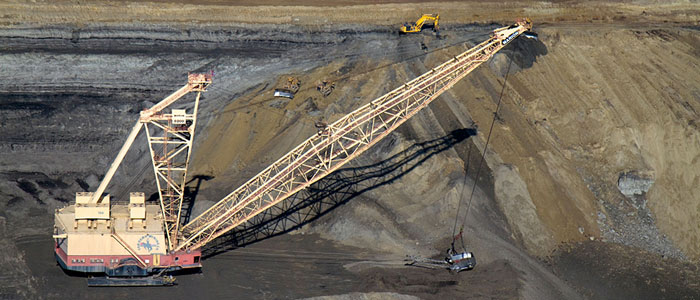
Agreements and memoranda of understanding (MoUs) worth approximately SAR 100 billion were signed in January at the fifth edition of the Future Minerals Forum (FMF) in Riyadh. The development spans the mining value chain from exploration through processing, research and development, financing and sustainability frameworks. These deals include cross-border cooperation and technology partnerships intended to strengthen the kingdom’s participation in critical mineral markets.
The event itself attracted more than 21,000 participants, including ministers, industry executives, technical experts and investors representing over 100 countries. The forum has grown significantly since its inception, reflecting Saudi Arabia’s intent to integrate foreign investment and global expertise into its mineral and industrial strategy.
The FMF also facilitated a series of bilateral MoUs on mineral resources cooperation with countries such as Chile, Canada, and Brazil. Theseagreements, signed alongside the broader forum activities, are intended to enhance technical exchange, investment flows and joint research efforts in critical minerals and sustainable mining practices, underscor -ing the global interdependence of resource supply chains
The Ministry of Industry and Mineral Resources reported record growth in new mining exploitation licences issued in 2025, marking a 220% increase compared with 2024. The surge shines a spotlight on the growing attractiveness of the kingdom’s mining investment environ- ment, and ongoing efforts to exploration and development of mineral resources, estimated to be worth more than SAR 9.4 trillion.
Total investment tied to these newly licensed projects has exceeded SAR 44 billion, with activity concentrated on extracting high-grade ores such as gold and phosphate. The ministry is continuing to facilitate investment and streamline procedures for both domestic and international firms, supporting sector expansion and improving returns.
KEY TO DIVERSIFICATION EFFORTS
These initiatives align with Saudi Vision 2030, which positions mining as the third pillar of national industry and a central driver of economic diversification.
The sector’s progress is also reflected internationally. In the 2024 annual survey of mining companies conducted by Fraser Institute, Saudi Arabia climbed sharply in the Mining Investment Attractiveness Index – from 114th place in 2013 to 23rd globally – highlighting the impact of regulatory and legislative reforms across the industry.
The overall government plan is to raise capital in the mining sector from around SAR 45 billion in 2024 to nearly SAR 92 billion between 2025 and 2030. This includes doubling foreign direct investment in the sector and creating an investment environment capable of delivering average internal rates of return ranging between 20% and 30%.
Government officials stress that the current phase requires bold and coordinated action by governments, the private sector, and global financial institutions to overcome financing challenges and accelerate the development of mining projects across the value chain. Rising global demand for strategic minerals reflects a long-term structural shift rather than a temporary market cycle.
A significant development emerging from FMF 2026 was the initial agreement between the Public Investment Fund (PIF) and Red Sea Aluminium Holdings (RSAH) to pursue an advanced integrated aluminium complex in Yanbu on the Red Sea coast. The complex is planned to incorporate advanced smelting and continuous casting technologies, positioning it among the largest downstream aluminium production facilities in the Middle East. The project aims to produce high-value aluminium products for both domestic use and export markets.
Reflecting the strategic priority attached to mining and related sectors,Saudi authorities have pursued efforts to issue exploration licenes and extend regulatory clarity. Recent public reports indicate that several hundred new mining licenses were issued in late 2025, broadening the base of potential projects across diverse geological regions.
NEW LICENSING DEALS
Saudi Arabia also advanced the mining sector by issuing its eighth licensing round in February, granting exploration rights across more than 4,700 square kilometres (sq km) of mineralised terrain containing copper, gold, silver, lead, and zinc deposits. These licences were allocated to a mix of local and international companies following transparent competitive bidding, expanding the base of potential mining projects within the kingdom.
Authorities also announced the opening of pre-qualification rounds for subsequent licensing cycles that collectively encompass over 13,000 sq km of prospective geological belts, signalling continued momentum in exploration and investor engagement.
To support long-term talent requirements, the kingdom also announced the launch of a Saudi School of Mines, envisaged as a national institution to train engineers and specialists in mining, metallurgy, and associated disciplines. This initiative aims to build a domestic talent pipeline aligned with global best practices and the technical demands of modern mineral value chains.
These developments occur against the backdrop of persistent economic diversification efforts in Saudi Arabia, where mining and metals are increasingly viewed as complementary to the traditional energy sector.
The mining sector’s potential contribution to GDP, employment and export revenues has received policy emphasis, supported by reforms aimed at streamlining licensing, enhancing geological data accessibility, and improving regulatory frameworks for foreign and domestic investors.

ECONOMY
Oil and non-oil sectors flex their muscles to keep the country humming, boosting business confidence and earning a ratings agency’s thumbs up.
LABOUR MARKET
Since introducing reforms that have boosted female labour force participation, the country has seen a surge in non-oil economic activities.
RENEWABLES
The country appears to be on track to meet its ambitious target of supplying almost 50% of its electricity through renewable natural resources by 2030.
TRANSPORT
Improving inter-city links will not only boost passenger mobility and tourism flows, but also support the logistics sector and strengthen local supply chains.

Your are now leaving this site
Your are now leaving this site
You are about to leave this site. You are being redirected to an external site. Would you like to leave this site?










© SAB, Saudi Arabia. All Rights Reserved, 2025
Saudi Awwal Bank, a listed joint stock company, incorporated in the Kingdom of Saudi Arabia, with paid in capital of SAR 20,547,945,220, commercial registration certificate 1010025779, unified number 7000018668, Mailing Address: P.O. Box 9084, Riyadh 11413. National Address: 7383 King Fahad Branch Rd, 2338 Al Yasmeen Dist., 13325 Riyadh, Kingdom of Saudi Arabia, Tel. +966 11 4050677, www.sab.com, licensed pursuant to the Council of Ministers Resolution No. 198 dated 06/02/1398H and Royal Decree No. M/4 dated 12/08/1398H, and regulated and supervised by the Saudi Central Bank.