
 Security Center
 ATM & Branches
RENEWABLES
|


How can we help?
Filter
Looks like we don’t have any matches for
Try a different search term or check out some of our suggestions below.

Frequently Asked Questions
Have questions about SAB banking services? Let us help you with these frequently asked questions.
FAQS
Customer Service
Our friendly Customer Support team are on hand to help with any queries you have. We're here to help!
Contact Us


POWERING AHEAD: SAUDI EYES BIGGER ROLE FOR RENEWABLES IN ENERGY MIX
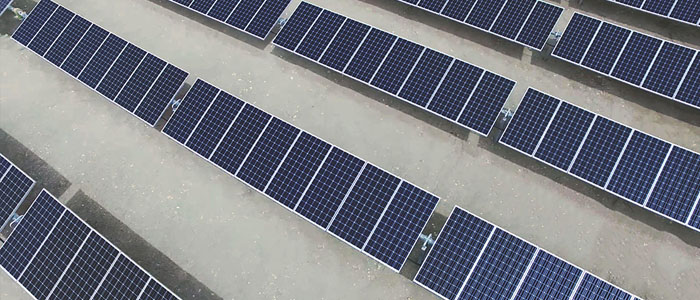
Saudi Arabia’s renewable energy sector has transitioned from planning to real-world execution, driven by the strategic objectives of the National Renewable Energy Program (NREP) and Vision 2030, aimed at diversifying the kingdom’s energy mix and reducing dependence on fossil fuels.
Under this roadmap, the country targets between 100 gigawatts (GW) and 130 GW of renewable capacity by 2030, with renewables expected to supply roughly half of the Saudi’s electricity by then.
This is part of initiatives to combat the impacts of climate change and create a cleaner, greener future for the kingdom and the rest of the world, it includes implementing comprehensive energy efficiency programmes, making significant investments in clean hydrogen and renewable energy sources, and developing cutting-edge carbon capture technology.
The kingdom has moved beyond early project development to build an operational renewable portfolio of 6.55 GW, comprised predominantly of solar capacity (about 6.15 GW) and a smaller wind component (around 0.4 GW) from projects like the Dumat Al-Jandal wind farm. This reflects a step change from previous years where installed capacity was in the low single-digit GW range.
Investments into these operational facilities stood at nearly SAR 19.84 billion by 2024, underscoring the financial commitment underpinning the renewable transition, according to the latest available data from Saudi Renewable Tracker, developed by the King Abdullah Petroleum Studies and Research Center. The majority of this capital has flowed into solar projects, aligning with the kingdom’s strong solar resource potential, while wind deployments complement seasonal and geographic diversity.
NEW PROJECTS IN 2025
The renewable pipeline has expanded significantly through successive NREP tender rounds. By late 2025, Saudi authorities had tendered at least 57.5 GW across 64 projects, including solar, wind, and energy storage initiatives, with about 38.7 GW already awarded through Power Purchase Agreements (PPAs). These PPAs represent long-term commit- ments that reduce offtake risk and attract international capital. officials indicate that continued competitive pricing reflects financing structures, procurement design, and sustained investor participation in the kingdom’s renewable energy market.
In 2025 alone, five new large-scale renewable projects with a combined capacity of 4.5 GW were awarded under the sixth NREP round, securing over SAR 9 billion in investment. Such rounds continue to drive down costs of clean energy – as evidenced by competitive levelized cost of energy (LCOE) bids – and signal robust market confidence.
It included the Dawadmi Wind Independent Power Producer project in Riyadh Province, with a capacity of 1,500 megawatts (MW), which was awarded to a consortium including Korea Electric Power Corporation, Nesma Renewable Energy Company Ltd., and Etihad Water and Electricity Company PJSC. The project recorded an LCOE of 1.33803 US cents per kilowatt-hour (kWh), representing a record low for wind power generation.
The Najran Solar project in Najran Region, developed with Abu Dhabi Future Energy Company, has a capacity of 1,400 MW and an LCOE equivalent to 1.09682 US cents per kWh, one of the lowest recorded solar generation costs globally. Additional solar awards include the 600 MW Ad Darb and 600 MW Samtah plants in Jazan Province, and the 400 MW As Sufun plant in Hail Province, involving international and domestic developer consortia.
According to programme data, by the end of 2025 total renewable capacity tendered in Saudi Arabia is expected to reach 64 GW. Following the signing of these sixth-round projects, total contracted renewable capacity will amount to 43.2 GW, of which approximately 12.3 GW is already connected to the national grid.
LOOKING AHEAD
The tracker suggests that in 2025, the kingdom added 5.8 GW in renewable capacity, which is expected to rise by 2.2 GW in 2026, before surging to 10.8 GW in 2027, 17.9 GW in 2028 and 20.6 GW in 2029.
Beyond generation capacity, Saudi Arabia is incorporating energy storage solutions to enhance grid stability as intermittent solar and wind power scales. Efforts to deploy gigawatt-hour-scale battery installations are underway, which is vital for smoothing output and maximising the value of renewable assets.
Saudi Arabia’s renewable trajectory is not only about scaling installed capacity; it reflects a comprehensive strategy that includes cost competitiveness, local value creation, and energy security. It also positions itself as a potential exporter of clean energy and related technologies, including green hydrogen and long-duration storage, as part of a broader energy export ecosystem.

ECONOMY
Oil and non-oil sectors flex their muscles to keep the country humming, boosting business confidence and earning a ratings agency’s thumbs up.
LABOUR MARKET
Since introducing reforms that have boosted female labour force participation, the country has seen a surge in non-oil economic activities.
MINERALS
A recent industry forum underscores the growing global interest in the kingdom’s mineral wealth as a shift to clean energy sparks demand for critical minerals.
TRANSPORT
Improving inter-city links will not only boost passenger mobility and tourism flows, but also support the logistics sector and strengthen local supply chains.

Your are now leaving this site
Your are now leaving this site
You are about to leave this site. You are being redirected to an external site. Would you like to leave this site?










© SAB, Saudi Arabia. All Rights Reserved, 2025
Saudi Awwal Bank, a listed joint stock company, incorporated in the Kingdom of Saudi Arabia, with paid in capital of SAR 20,547,945,220, commercial registration certificate 1010025779, unified number 7000018668, Mailing Address: P.O. Box 9084, Riyadh 11413. National Address: 7383 King Fahad Branch Rd, 2338 Al Yasmeen Dist., 13325 Riyadh, Kingdom of Saudi Arabia, Tel. +966 11 4050677, www.sab.com, licensed pursuant to the Council of Ministers Resolution No. 198 dated 06/02/1398H and Royal Decree No. M/4 dated 12/08/1398H, and regulated and supervised by the Saudi Central Bank.