
 Security Center
 ATM & Branches
TRANSPORT
|


How can we help?
Filter
Looks like we don’t have any matches for
Try a different search term or check out some of our suggestions below.

Frequently Asked Questions
Have questions about SAB banking services? Let us help you with these frequently asked questions.
FAQS
Customer Service
Our friendly Customer Support team are on hand to help with any queries you have. We're here to help!
Contact Us


SAUDI GOES FULL STEAM AHEAD WITH RAIL EXPANSION
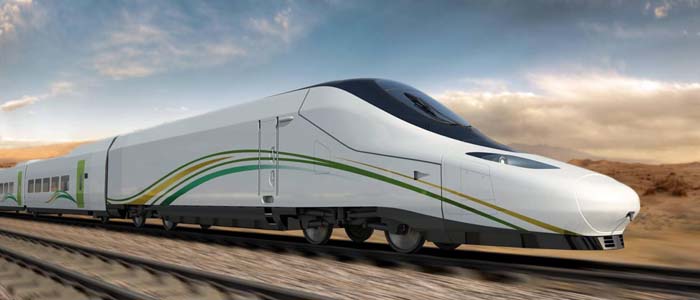
Saudi Arabia Railways recently agreed to buy 20 new high-speed trains from Spanish manufacturer Talgo to expand the fleet operating on the Haramain High-Speed Railway, part of an overarching goal to spread the network across the vast kingdom.
The acquisition aligns with the objectives of the National Transport and Logistics Strategy and is intended to strengthen the capacity and operational resilience of the Haramain network, particularly during peak Umrah and Hajj seasons. Deliveries of the new trains are scheduled to begin by the end of 2028, with full delivery expected by 2031. Once deployed, the trains will operate across the entire Haramain High-Speed Railway network, which includes five stations.
The Haramain High-Speed Railway connects Makkah and Madinah and is currently the fastest transport option between the two cities, operating at speeds of up to 300 kilometres per hour. The journey takes approximately two hours and includes intermediate stops at Jeddah, King Abdulaziz International Airport, and King Abdullah Economic City.
Saudi Arabia Railways existing Haramain fleet consists of 35 trains. The addition of 20 new units will increase the fleet to 55 trains, supporting higher passenger volumes and greater service flexibility. Each new train will comprise 13 carriages, including eight economy-class and five business-class carriages, with a total seating capacity of 417 passengers. This includes 304 economy-class seats and 113 business-class seats. The trains will also feature a dedicated carriage for passengers with disabilities, reflecting Saudi Arabia Railways focus on accessibility and inclusive transport services.
DELIVERING GROWTH
Beyond the Haramain network, Saudi Arabia Railways reported strong operational performance in 2025. Passenger volumes exceeded 14 million, while freight operations transported more than 30 million tonnes. Rail freight activity contributed to measurable environmental outcomes, including the elimination of an estimated two million truck journeys. This resulted in fuel savings of approximately 139 million litres and a reduction in carbon emissions of around 364,000 tonnes.
During the year, Saudi Arabia Railways also expanded its activities beyond core transport operations. This included the launch of the Dream of the Desert luxury tourism train, and the announcement of a SAR 6 billion real estate fund focused on developing land adjacent to railway stations in Makkah. Internationally, Saudi Arabia Railways received recognition from the International Union of Railways (UIC), becoming the first company to win its award for long-distance tourist trains.
At the Budget Forum 2026 event in Riyadh in December, Saleh Al-Jasser, the minister of transport, outlined broader developments across the transport and logistics sector. He stated that investment contracts exceeding 280 billion have been secured with local and international private sector partners, supported by structural reforms and ongoing infrastructure development.
According to the minister, transport and storage activities recorded 6.2% growth in their direct contribution to national GDP, driven by expansion in logistics services and commercial air transport.
Air freight volumes increased by 34% year on year, reaching 1.2 million tonnes, supporting trade flows and the kingdom’s economic diversification objectives. Employment in transport and warehousing also expanded, with job creation rising by 28% by the end of the first quarter of 2025. This translated into 144,000 new jobs, bringing total sector employment to nearly 651,000.
NEW TENDERS AWARDED
The continued expansion of the rail network is also reinforcing Saudi’s broader economic framework by improving connectivity between production centres, population hubs, and export gateways. Expanded passenger and freight capacity reduces transport costs and transit times, which is particularly relevant for sectors such as mining, petrochemicals, agriculture, and manufacturing, which rely on predictable logistics.
Rail links between inland reqions and ports support more efficient movement of bulk commodities and finished goods, strengthening supply chains and enhancing the competitiveness of non-oil exports. At the same time, improved intercity passenger rail services support labour mobility, tourism flows, and regional development by making secondary cities more accessible.
In December, Saudi Arabia Railways also announced the acquisition of 10 new passenger trains for the Eastern Railway network. These additions are intended to meet rising demand and support broader economic and urban development across connected regions. Logistics centres across the kingdom, reaching 24 by 2025.
Separately,Saudi Arabia Railways announced the issuance of a public tender for the design, manufacture, and supply of 10 new passenger trains for the Northern Network. The tender includes fleet maintenance services and forms part of Saudi Arabia Railways longer-term approach to improving operational readiness and asset sustainability. The deadline for bid submissions is in May, in line with approved regulatory procedures.
The new trains are expected to significantly increase the Northern Network’s capacity, raising annual seating availability to more than 2.4 million seats and supporting continued growth in intercity passenger travel.
The Northern Network spans approximately 2,700 kilometres and connects major cities including Riyadh, Al-Majmaah, Qassim, Hail, Al-Jouf, and Al-Qurayyat. Plans are in place to expand the network further through the addition of new passenger stations, including Al-Zulfi. Alongside this tender, Saudi Arabia Railways is also in the process of manufacturing 10 new passenger trains for the Eastern Line, reinforcing its phased approach to fleet modernisation across the national rail system.

ECONOMY
Oil and non-oil sectors flex their muscles to keep the country humming, boosting business confidence and earning a ratings agency’s thumbs up.
LABOUR MARKET
Since introducing reforms that have boosted female labour force participation, the country has seen a surge in non-oil economic activities.
MINERALS
A recent industry forum underscores the growing global interest in the kingdom’s mineral wealth as a shift to clean energy sparks demand for critical minerals.
RENEWABLES
The country appears to be on track to meet its ambitious target of supplying almost 50% of its electricity through renewable natural resources by 2030.

Your are now leaving this site
Your are now leaving this site
You are about to leave this site. You are being redirected to an external site. Would you like to leave this site?










© SAB, Saudi Arabia. All Rights Reserved, 2025
Saudi Awwal Bank, a listed joint stock company, incorporated in the Kingdom of Saudi Arabia, with paid in capital of SAR 20,547,945,220, commercial registration certificate 1010025779, unified number 7000018668, Mailing Address: P.O. Box 9084, Riyadh 11413. National Address: 7383 King Fahad Branch Rd, 2338 Al Yasmeen Dist., 13325 Riyadh, Kingdom of Saudi Arabia, Tel. +966 11 4050677, www.sab.com, licensed pursuant to the Council of Ministers Resolution No. 198 dated 06/02/1398H and Royal Decree No. M/4 dated 12/08/1398H, and regulated and supervised by the Saudi Central Bank.