
 Security Center
 ATM & Branches
INVESTMENT
|


How can we help?
Filter
Looks like we don’t have any matches for
Try a different search term or check out some of our suggestions below.

Frequently Asked Questions
Have questions about SAB banking services? Let us help you with these frequently asked questions.
FAQS
Customer Service
Our friendly Customer Support team are on hand to help with any queries you have. We're here to help!
Contact Us


FORWARD-LOOKING INVESTMENT VEHICLES TRANSFORM SAUDI’S ECONOMY
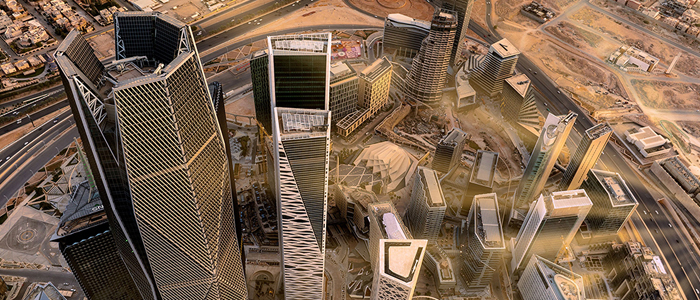
Saudi Arabia’s development model is being shaped by the scale and coordination of its state investment institutions. The Public Investment Fund (PIF) and the National Development Fund (NDF) remain central to this strategy, channelling capital into projects designed to diversify the economy, raise productivity, and crowd in private investment.
Budget 2026 outlines how the PIF has maintained momentum across its strategic portfolio, with activity in 2025 focused on long-term growth sectors rather than short-term stimulus.
The launch of the Expo 2030 Riyadh company, a unit of PIF, marked the formal start of delivery for one of the kingdom’s most ambitious global showcases. Alongside this, the fund continued to expand renewable energy projects in partnership with private developers, reinforcing the policy shift toward a more resilient energy mix.
In artificial intelligence (AI), PIF’s investment in HUMAIN underscored its ambition to position Saudi Arabia as a competitive global hub in advanced technologies.
HUMAIN will provide a comprehensive range of AI services, products and tools, including next-generation data centres, AI infrastructure and cloud capabilities, and advanced AI models and solutions. The company will also o er one of the world’s most powerful multimodal Arabic large language models (LLMs).
This is part of an overarching ambition to invest in space, technology, robotics, and high-end manufacturing to ensure Saudi Arabia remains at the forefront of modern technologies.
PRIVATE SECTOR GROWTH
The kingdom’s Regional Headquarters Attraction Program has also surpassed its original Vision 2030 target, drawing in more than 682 companies compared with a goal of 500. The current phase is shifting from pure relocation toward higher-value functions, with emphasis on research, development, innovation centres, and global media operations.
At the same time, the country is using special economic zones to localise strategic industries. In Ras Al-Khair, the push to build a globally competitive maritime cluster has secured investments of roughly SAR 26 billion through the King Salman International Marine Industries and Services Park. The objective is to capitalise on Saudi Arabia’s position along major shipping lanes by anchoring shipbuilding, repair, and maintenance domestically rather than relying on external hubs.
Across priority sectors, the government has also facilitated around 40 major investment deals since mid-2022, with a combined value of approximately SAR 320 billion. These projects are intended to deepen diversification, generate higher-quality employment, and advance Vision 2030 targets.
The macro impact is already visible in capital formation. Fixed investment reached a record SAR 1.44 trillion in 2024, exceeding the National Investment Strategy target by 49%. Investment accounted for 31% of GDP, well above the Vision 2030 benchmark of 26%. Momentum has continued into 2025, with fixed capital formation growing by 6% in the first half of the year.
THE NIS EFFECT
Meanwhile, the National Industrial Strategy (NIS) is leading the e ort to diversify the production base and expand non-oil exports. In 2025, the NIS launched a standardised incentive programme for manufacturing, qualifying 43 initial opportunities across automotive, machinery and equipment, and chemicals. The focus is on enabling the domestic production of goods that are currently imported, opening space for higher-value investments, and reducing entry barriers for both local and foreign investors.
The first phase of eligible projects is expected to add around SAR 2.3 billion to GDP and create more than 5,700 jobs. More broadly, industrial licencing has accelerated sharply, reflecting regulatory streamlining and targeted incentives.
Around 12,387 industrial licenses were issued in 2025, with 9,668 linked to factories that have already become operational. The strategy has also pushed technological upgrading through the “Factories of the Future” initiative, bringing more than 3,000 plants into advanced manufacturing programmes designed to raise productivity and international competitiveness.
Investment attraction has remained robust, according to Budget 2026. At the end of last year, more than 1,100 investors had been brought into industrial cities, lifting the cumulative total above 8,500, with committed investment of roughly SAR 437 billion.
Looking ahead to 2026, the strategy aims to introduce additional industrial products to the Saudi market, expand the footprint of industrial cities to 42 locations through the addition of three new sites, and deepen localisation by partnering with SMEs. A key objective is to raise local content in both government procurement and private-sector supply chains, reinforcing domestic value creation.
Running in parallel, the NIS has sought to raise the volume and e ciency of capital formation, while giving a larger role to private and foreign investors. As such, foreign direct investment inflows reached SAR 119.2 billion – up 24.2% year on year and above the strategy’s SAR 109 billion target.
Employment outcomes are also material, with data from the General Organization for Social Insurance indicating that the FDI had generated more than 105,000 jobs for Saudis through the third quarter of 2025, bringing total job creation since the strategy’s launch to approximately 455,000.

ECONOMY
The kingdom’s strategy powered up the non-oil sector, helping the economy maintain strong momentum.
GLOBAL OUTLOOK
Despite the myriad headwinds contributing to uncertainties, there appears to be strong grounds for optimism across the world, according to latest prediction.
OIL
Ongoing industrial expansion and sustained economic activity in emerging economies, particularly China and India, have pushed global consumption higher.
SAUDI EXCHANGE
The country’s stock market will be open to the world e ective 1 February and is expected to support authorities’ goal to lure more international capital.

Your are now leaving this site
Your are now leaving this site
You are about to leave this site. You are being redirected to an external site. Would you like to leave this site?










© SAB, Saudi Arabia. All Rights Reserved, 2025
Saudi Awwal Bank, a listed joint stock company, incorporated in the Kingdom of Saudi Arabia, with paid in capital of SAR 20,547,945,220, commercial registration certificate 1010025779, unified number 7000018668, Mailing Address: P.O. Box 9084, Riyadh 11413. National Address: 7383 King Fahad Branch Rd, 2338 Al Yasmeen Dist., 13325 Riyadh, Kingdom of Saudi Arabia, Tel. +966 11 4050677, www.sab.com, licensed pursuant to the Council of Ministers Resolution No. 198 dated 06/02/1398H and Royal Decree No. M/4 dated 12/08/1398H, and regulated and supervised by the Saudi Central Bank.