
 Security Center
 ATM & Branches
OIL
|



How can we help?
Filter
Looks like we don’t have any matches for
Try a different search term or check out some of our suggestions below.

Frequently Asked Questions
Have questions about SAB banking services? Let us help you with these frequently asked questions.
FAQS
Customer Service
Our friendly Customer Support team are on hand to help with any queries you have. We're here to help!
Contact Us


OIL DEMAND GROWTH REMAINS STRONG DESPITE UNCERTAINTIES
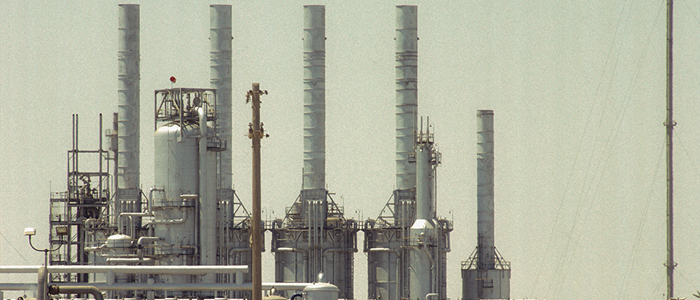
Despite trade tensions and geopolitical uncertainty, global economic conditions in 2025 saw steady expansion. Fiscal stimulus across large economies – including Germany, Japan, India, the United States, and China – combined with easing monetary policies in most major jurisdictions, helped sustain momentum.
These macroeconomic conditions underpin the outlook for global energy demand. In 2025, world oil demand is estimated to have increased by 1.3 million barrels per day (million bpd) year on year, according to the latest report by the Organization of the Petroleum Exporting Countries (OPEC). The bulk of this growth is expected to come from emerging economies, where demand is projected to rise by approximately 1.2 million bpd.
Asia, driven by sustained economic activity in China, India, and neighbouring emerging markets, is anticipated to be the principal contributor. This reflects continued industrial production, transportation demand, and expanding petrochemical capacity across the region.
In contrast, demand growth in developed economies (OECD) is expected to remain modest. The OECD Americas accounted for most of the region’s increase, with oil demand rising by around 0.1 million bpd in 2025, early estimates suggest. OECD Europe is expected to see only a marginal year-on-year increase, while demand in the OECD Asia-Pacific is forecast to remain weak. These trends reflect a combination of structural e ciency gains, fuel substitution, and slower population and industrial growth relative to emerging markets, OPEC noted in its report.
CONSUMPTION TO GROW
OPEC expects year-on-year global oil demand to rise by 1.4 million bpd in 2026, slightly exceeding the growth anticipated for 2025. OECD demand is seen rising by approximately 0.2 million bpd, again led by the Americas, with a small improvement in Europe. The Asia-Pacific region within the OECD is projected to remain subdued, although some recovery from 2025 levels is anticipated. In the non-OECD countries, demand is expected to grow by more than 1.2 million bpd, with other Asia once again driving expansion.
India, China, the Middle East, and Latin America are all expected to contribute to the rise in demand, reflecting sustained economic activity and ongoing growth in petrochemical production. Demand for transportation fuels and distillates is projected to remain supported by these structural drivers.
On the supply side, the United States is expected to account for around 0.5 million bpd growth year on year. Other key contributors include Brazil, Canada, and Argentina. These additions reflect ongoing investment in upstream projects, particularly in shale, o shore, and oil sands developments, as well as continued e ciency improvements in mature producing regions.
“Global observed inventories rose to four-year highs at 8,030 million barrels (mb),” according to the International Energy Agency (IEA). “Observed global oil stocks rose by 424 mb from January through November, or 1.3 mb/d on average. Notably, crude oil on water has surged by 213 mb since end-August, as sanctioned barrels struggled to find buyers, record long-haul shipments from the Americas to Asia boosted volumes in transit and exports from OPEC+ members in the Middle East rose on higher quotas and seasonally weaker regional demand.”
For their part, the eight OPEC+ countries, namely Saudi Arabia, Russia, Iraq, UAE, Kuwait, Kazakhstan, Algeria, and Oman rea rmed their decision to pause production increments in February and March 2026 due to seasonality.
The eight participating countries reiterated that the 1.65 m bpd may be returned in part or in full subject to evolving market conditions and in a gradual manner. The countries will continue to closely monitor and assess market conditions, and in their continuous e orts to support market stability.
GAS OUTLOOK
Global natural gas price dynamics have diverged sharply across regions in recent months as the expanding role of liquefied natural gas (LNG) reshapes global market balances.
The World Bank’s natural gas price index rose modestly in November 2025 after a prior quarterly decline, reflecting divergent movements across major benchmarks.
In North America, US natural gas futures surpassed the USD 5 per million British thermal units (mmbtu) mark – the highest level in three years – driven by strong demand for US LNG exports to Europe and colder winter weather. In contrast, European benchmark prices declined steadily since mid-2025, reaching their lowest levels since spring 2024.
Global gas consumption growth was subdued in 2025, rising only around 0.5% year on year as elevated prices and macroeconomic headwinds constrained demand. Unlike previous years, Europe accounted for much of the growth in demand, supported by colder weather, reduced renewable generation, and the need to refill storage.
Meanwhile, Asian demand remained flat compared with 2024, influenced by higher LNG prices, reduced industrial consumption, and strong renewable energy output. China’s LNG imports contracted significantly due to increased domestic production and weaker overall demand. A modest rebound in global consumption – projected around 2% in 2026 – will depend largely on recovery in the Asia Pacific industrial and power sectors, the World Bank expects.
On the supply side, strong production growth in North America underpinned global expansion in 2025, with US output rising an estimated 3% and more than half of LNG exports directed to the European Union. Russian natural gas production contracted due to reduced pipeline exports and subdued domestic demand.
Looking ahead, total global natural gas production is forecast to grow by roughly 2.5% in 2026, driven by further growth in LNG exports from North America and Qatar as new liquefaction capacity comes online.

ECONOMY
The kingdom’s strategy powered up the non-oil sector, helping the economy maintain strong momentum.
GLOBAL OUTLOOK
Despite the myriad headwinds contributing to uncertainties, there appears to be strong grounds for optimism across the world, according to latest prediction.
INVESTMENT
This year’s budget outlines the allocators’ growing e orts to align capital with industries that promote diversification, job creation, and private sector growth.
SAUDI EXCHANGE
The country’s stock market will be open to the world e ective 1 February and is expected to support authorities’ goal to lure more international capital.

Your are now leaving this site
Your are now leaving this site
You are about to leave this site. You are being redirected to an external site. Would you like to leave this site?










© SAB, Saudi Arabia. All Rights Reserved, 2025
Saudi Awwal Bank, a listed joint stock company, incorporated in the Kingdom of Saudi Arabia, with paid in capital of SAR 20,547,945,220, commercial registration certificate 1010025779, unified number 7000018668, Mailing Address: P.O. Box 9084, Riyadh 11413. National Address: 7383 King Fahad Branch Rd, 2338 Al Yasmeen Dist., 13325 Riyadh, Kingdom of Saudi Arabia, Tel. +966 11 4050677, www.sab.com, licensed pursuant to the Council of Ministers Resolution No. 198 dated 06/02/1398H and Royal Decree No. M/4 dated 12/08/1398H, and regulated and supervised by the Saudi Central Bank.