Search
 Security Center
 ATM & Branches
ECONOMY
-
Wealth Management
-
- Apply Now for SAB Credit Card
- Apply for a Credit Card (Non-SAB customer)
- Miles Credit Cards
- ICSAB Credit Cards
- SAB VISA Cashback Credit Card
- SAB noon VISA Credit Card
- Special Offers
- AQSAT - Installment Plans
- SAB Privileges and Security
- Credit Card Payments
- Valet Services
- AQSAT Credit Card
- Airport Transfer
- Car Services
-
Low Limit Credit Cards
-
Debit Cards
-
Prepaid Card
-
ICSAB+
-
Finance
-
Help & Support
-
- e-Account opening
- SAB Online
- SAB Mobile
- SAB Phone
- SAB 360°
- SAB Store
- eForms
- Update your Information Online
- Branches & ATM Locator
- Self Service Machines
- Verify Digital Bank Documents
- E-Statement
- SMS Notification Service
- Audio Forms
- Appointment Booking
- Voice Guidance ATMs
- Handicap Branches
- Customer Awareness
-
Help & Support
-
Cards
-
-
-
Tools & Resources
-
Ways to Bank
-
Help & Support
-
ESG at SAB
-
Security
-

How can we help?
Filter
Looks like we don’t have any matches for
Try a different search term or check out some of our suggestions below.

Frequently Asked Questions
Have questions about SAB banking services? Let us help you with these frequently asked questions.
FAQS
Customer Service
Our friendly Customer Support team are on hand to help with any queries you have. We're here to help!
Contact UsQuick Links
Filters


VISION 2030: SAUDI’S DIVERSIFICATION JOURNEY HOLDS STEADY
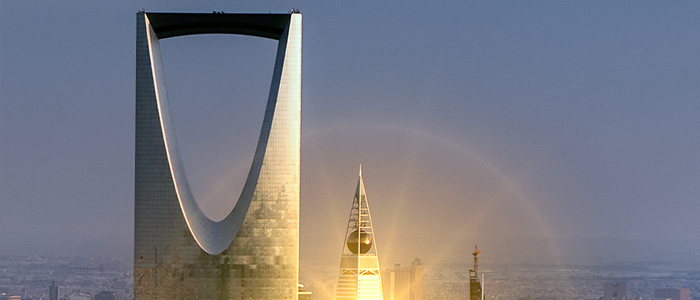
Saudi Arabia’s nominal GDP has risen two times in 2025 since the Saudi Vision 2030 was launched, while foreign direct investment (FDI) has grown five times during the period, according to Invest Saudi’s Economic and Investment Monitor Q1 2026.
“The non-oil sector has emerged as a key engine of economic growth, accounting for more than half of real GDP and reaching around 55% by the end of 2025. Moreover, non-oil government revenues more than doubled, increasing by over 170% compared to 2016, driven by fiscal reforms and the expansion of revenue streams,” according to Invest Saudi, a division of the Ministry of Commerce.
International institutions also continue to predict solid medium-term growth for Saudi Arabia. In its April 2026 World Economic Outlook, the International Monetary Fund (IMF) forecasts Saudi GDP growth of 3.1% in 2026, while revising its 2027 projection upward to 4.5%. The Organisation for Economic Co-operation and Development (OECD) expects growth of 4.0% in 2026 and 3.6% in 2027 for the kingdom, while the World Bank estimates growth of 3.1% and 4.4% in 2026 and 2027, respectively.
The kingdom’s macroeconomic fundamentals have also been reflected in stable sovereign credit ratings. In January 2026, Fitch Ratings a rmed the country’s sovereign rating at A+ with a stable outlook, citing continued reform momentum, including the implementation of a new investment law and further opening of real estate and capital markets to foreign investors. Similarly, S&P Global Ratings rea rmed its A+ rating with a stable outlook in March 2026, highlighting the role of ongoing reforms in supporting non-oil sector development and fiscal sustainability.
Q1 GDP GROWS
At the domestic level, economic activity continued to expand. According to flash estimates from the General Authority for Statistics (GASTAT), year-on-year real GDP increased by 2.8% in the first quarter of 2026, supported by growth across all major sectors. Non-oil activities expanded by 2.8%, oil activities increased by 2.3%, and government activities rose by 1.5%.
Business activity remained in expansionary territory, although at a more moderate pace. The Purchasing Managers’ Index (PMI) averaged 53.7 points in the first quarter of 2026, down from 59.0 points in the previous quarter. In April, the PMI rose to 51.5 points from 48.8 points in March, indicating continued private sector expansion despite softer business conditions compared with a year earlier.
SAR 6.7 TRILLION BOOST
Investment activity remains a key pillar of Saudi Arabia’s economic transformation. Since its launch in 2021, the National Investment Strategy (NIS) has generated approximately SAR 6.7 trillion in investments by the end of 2025, equivalent to around 54% of its cumulative SAR 12.4 trillion target and ahead of its planned trajectory.
Fixed investment levels have also remained strong. Gross fixed capital formation (GFCF) increased by 0.1% in 2025, supported by a 7.3% rise in investment within the non-government, non-oil sector, which accounted for approximately 76% of total GFCF. This represents a significant shift from 2017, when the private non-oil sector accounted for 59% of total investment. Over the same period, the government sector’s contribution declined from 26% to 11%, highlighting the growing role of private capital in economic development.
FDI continued to strengthen. According to GASTAT estimates, FDI inflows reached approximately SAR 133 billion in 2025, an increase of around 12% compared with the previous year. Total FDI stock rose to approximately SAR 1.1 trillion, up 13% year on year and more than double its 2017 level. FDI stock represented nearly 23% of GDP in 2025, reflecting the increasing importance of foreign capital within the economy.
Momentum has carried into 2026. During the first quarter, Saudi Arabia issued 7,742 investment licences, representing a 68% increase compared with the same period in 2025, excluding licences issued during the Anti-Concealment Law corrective period. Construction, wholesale and retail trade, and manufacturing accounted for approximately 65% of all licences issued during the quarter.

DIGITAL ECONOMY
From transforming visitors’ Hajj experience, to enhancing data centre capacity and healthcare delivery, the country is ready to thrive in the digital economy.
MINING
The sector has consistently attracted investors and now represents a SAR 138-billion industry that is vital to the country’s economic diversification strategy.
RETAIL
Latest data suggest companies generally expect economic activity in the country to remain stable or improve in the coming months.
SMEs
Regulatory reforms and funding schemes have unleashed the entrepreneurial spirit in the kingdom and encoura

Your are now leaving this site
Your are now leaving this site
You are about to leave this site. You are being redirected to an external site. Would you like to leave this site?