

 Security Center
 ATM & Branches

Frequently Asked Questions
Have questions about SAB banking services? Let us help you with these frequently asked questions.
FAQS
Customer Service
Our friendly Customer Support team are on hand to help with any queries you have. We're here to help!
Contact Us


SAUDI VISION 2030’S TRANSFORMATIONAL IMPACT BECOMES PALPABLE
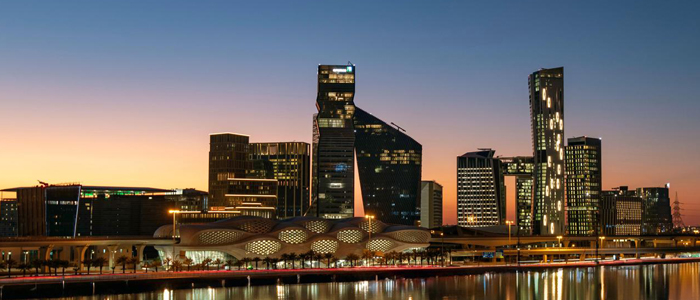
Since its launch in 2016, Saudi Vision 2030 has reshaped the kingdom’s economic and social landscape.
Principally, that led to the country’s fiscal framework evolving from a traditional budgeting exercise to a strategic, forward-looking tool designed to navigate global economic changes and domestic priorities. The step-change cascaded across the economy, infrastructure, and society.
As ministries, private entities and the workforce embraced Vision 2030, the entire country was driven to restructure national priorities and direct spending, investments, and efforts toward cectors that enhance long-term competitiveness.
Non-oil activities now account for 56% of GDP, highlighting the growing maturity of the non-oil economy as one of the clearest indicators of progress since Vision 2030’s launch. The Ministry of Finance recently noted that fiscal discipline and improved spending efficiency have become standard practice across government entities, reflecting deeper institutional change.
One result is the attraction of more than 600 global companies to the kingdom, alongside significant advances in domestic capability. Pharmaceutical localisation has increased from 20-35%, and the localisation of military industries has risen from 4% to more than 20%. The breadth of sectoral expansion is notable: 74 sectors have grown more than 5% annually in the past five years, and nearly half of all non-oil activities have achieved around 10% annual growth. These dynamics underscore Saudi Arabia’s rising profile in global economic discussions, and its ambition to become a major logistics hub linking three continents.
SKILLS UPGRADE
Investment in people, a core pillar of Vision 2030, featured prominently in the Budget 2026 Forum organised by the Ministry of Finance. Discussions among several ministers emphasised how social development has advanced alongside economic reforms.
Women’s participation in the labour market has reached 34%, while unemployment among Saudis declined to 6.8%. Programmes aimed at human capital development are showing measurable results: two-thirds of Saudi scholarship recipients now attend top-ranked global universities, and more than 100,000 gifted students have earned hundreds of regional and international awards.
The health sector’s contribution to GDP has reached 5%, infectious disease-related deaths have fallen by half, and healthcare coverage has expanded to nearly 95%. These outcomes reflect the broader trend of government investment translating into improved public services and greater institutional capacity.
Tourism and sports – two sectors designated as promising engines of future growth – were also highlighted. Tourism spending reached SAR 275 billion, with more than 116 million visitors recorded in the past year. International arrivals from Europe and the Asia-Pacific region increased by double digits, reinforcing the sector’s rapid expansion. The kingdom’s target of 150 million tourists by 2030 remains a central component of the diversification agenda.
In sports, the domestic market has grown to SAR 32 billion, with projec- tions to more than double by 2030. officials underlined that 70% of sporting events are now operated by Saudi talent, a reflection of both workforce development and market expansion.
Infrastructure development remains a defining element of Vision 2030’s execution. The Budget Forum’s fourth session outlined significant progress in housing, smart cities, transport networks, and logistics. More than 1.2 million beneficiaries will have received housing support by the end of 2025, and thousands of families have been enabled to purchase homes or access developmental housing programmes. Efforts to strengthen transport and logistics continue to underpin saudi Arabia’s goal as a global logistics platform, supported by ongoing investments in roads, ports, and mobility systems.
BUILDING INDUSTRIES
Industrial development and national projects represent another front where measurable progress is evident. Localisation efforts in military and industrial production are improving self-sufficiency, while broader industrial strategy aims to raise sectoral GDP contributions to SAR 1.4 trillion by 2035.
Digital transformation has advanced significantly, particularly in the justice sector, where paperless processes and online services have streamlined operations. In the ports sector, investments exceeding SAR 30 billion have increased capacity by 50%, enhancing the kingdom’s competitiveness in global trade.
Together, these achievements illustrate how Vision 2030’s reforms have transitioned from planning to implementation, and from implementation to tangible results. Saudi’s fiscal policy, economic diversification, social development, and infrastructure modernisation efforts continue to reinforce one another.
While challenges linked to global economic conditions persist, the government’s strategic approach highlights a commitment to long-term stability and readiness for change.

ECONOMY
All key economic sectors performed exceptionally well during the quarter, suggesting broad-based growth, as other indicators also lent support.
MEGA PROJECTS
Beyond the spectacle, the global event will reinforce its host’s commitment to climate responsibility and social cohesion.
SAUDI BUDGET
Growth-oriented expenditures will remain in focus next year, as do investments in social development programmes like education and healthcare.
TECHNOLOGY
Major industry players will collaborate with the kingdom on projects designed to boost the country’s artificial intelligence capabilities and talent pool.

Your are now leaving this site
Your are now leaving this site
You are about to leave this site. You are being redirected to an external site. Would you like to leave this site?










© SAB, Saudi Arabia. All Rights Reserved, 2025
Saudi Awwal Bank, a listed joint stock company, incorporated in the Kingdom of Saudi Arabia, with paid in capital of SAR 20,547,945,220, commercial registration certificate 1010025779, unified number 7000018668, Mailing Address: P.O. Box 9084, Riyadh 11413. National Address: 7383 King Fahad Branch Rd, 2338 Al Yasmeen Dist., 13325 Riyadh, Kingdom of Saudi Arabia, Tel. +966 11 4050677, www.sab.com, licensed pursuant to the Council of Ministers Resolution No. 198 dated 06/02/1398H and Royal Decree No. M/4 dated 12/08/1398H, and regulated and supervised by the Saudi Central Bank.