Search
 Security Center
 ATM & Branches
Saudi Outlook

How can we help?
Filter
Looks like we don’t have any matches for
Try a different search term or check out some of our suggestions below.

Frequently Asked Questions
Have questions about SAB banking services? Let us help you with these frequently asked questions.
FAQS
Customer Service
Our friendly Customer Support team are on hand to help with any queries you have. We're here to help!
Contact Us


Saudi economy on the upswing despite geopolitical disruptions
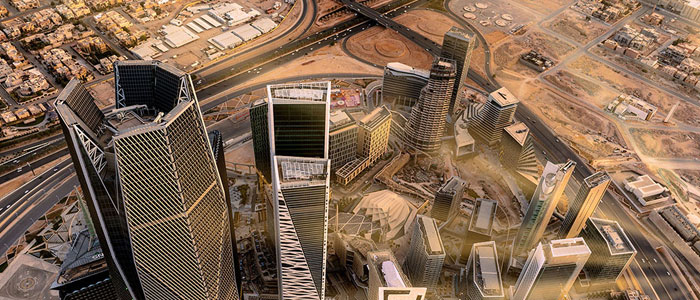
Saudi Arabia entered 2026 with strong economic momentum, but the regional conflict and disruption to shipping through the Strait of Hormuz have added to near-term economic headwinds.
The International Monetary Fund’s (IMF) latest Article IV assessment nonetheless points to an economy with substantial buffers, a more diversified non-oil base and greater capacity to absorb external disruptions than in previous cycles. While growth is expected to slow this year, the IMF sees a potentially strong rebound as trade conditions normalise, supported by domestic demand, investment, and continued implementation of Vision 2030 reforms.
The economy grew by 4.6% in 2025, reflecting both the unwinding of Organization of the Petroleum Exporting Countries and its allies’ (OPEC+) production cuts and continued strength in non-oil activity. Domestic demand remained an important growth driver, while inflation stayed contained at around 2%. Labour market conditions also remained favourable, with unemployment among Saudi nationals at historically low levels.
The immediate outlook is more subdued on regional tensions. The IMF projects real GDP growth of 1.7% in 2026, down from 4.6% in 2025, with non-oil growth easing to 2.6%. The slowdown largely reflects the impact of disrupted maritime trade and lower oil export volumes.
However, the fund expects activity to recover, with GDP growth projected to accelerate to 5.5% in 2027 and non-oil growth to 4.5%.
Efforts of Saudi authorities to expand trade beyond oil are also bearing fruit. Yang Yi, the Chinese consul general to Jeddah, recently noted that bilateral trade between Saudi Arabia and China crossed USD 50 billion in the first half of the year, which comes after last year’s USD 100 billion. New Chinese investments in the kingdom are mostly in new energy, advanced technologies and biotechnology.
IMF ASSESSMENT
Such moves to expand trade and investment will help Saudi absorb the shifts in regional economy, according to the IMF. Saudi Arabia’s stable employment, robust government spending, and the continued execution of major capital projects are expected to support domestic demand. Inflation is projected to rise only modestly to 2.2% in 2026, despite higher shipping and insurance costs, reflecting subdued rent inflation and price controls on selected fuel and food items.
Fiscal conditions provide another layer of support, although they also underline the importance of disciplined spending over the medium term. Higher oil revenues are expected to narrow the central government fiscal deficit from 5.8% of GDP in 2025 to 3.7% in 2026, despite the economic disruption. Public debt is projected to remain relatively contained at 32.1% of GDP this year, rising to 34.4% in 2027. The IMF believes Saudi Arabia has the fiscal space to respond if the shock becomes more severe, but recommends that any additional support remain targeted, temporary, and transparent.
The medium-term challenge is less about managing the immediate shock than maintaining the pace and quality of economic transformation. The IMF highlighted substantial progress under Vision 2030 over its first decade, including stronger non-oil activity, a larger role for the private sector, improved labour market outcomes, and increased female labour force participation. The fund views these reforms as an important source of resilience and considers Saudi Arabia’s experience potentially instructive for other economies pursuing large-scale diversification programmes.
At the same time, the IMF is encouraging a more selective approach to public investment as the transformation enters a more mature phase. It welcomed the recalibration of the Public Investment Fund’s (PIF) strategy towards more selective capital allocation and a greater role for the private sector. This could help shift the growth model further from government-led investment towards productivity-enhancing private investment and business formation.
Fiscal consolidation will also become increasingly important as conditions normalise. The IMF recommends greater mobilisation of non-oil revenues, expenditure rationalisation, stronger public investment management and energy subsidy reforms. These measures would help preserve fiscal buffers while ensuring that government resources remain focused on projects with the strongest economic returns.
For investors and businesses, the broader message is one of resilience alongside a period of adjustment. Saudi Arabia’s investment story remains supported by domestic demand, infrastructure development, economic diversification, and a relatively strong fiscal and financial position. The IMF’s projected 5.5% growth rebound in 2027 underscores the potential for the current slowdown to prove temporary if regional trade routes normalise. The kingdom’s fiscal and external buffers, resilient infrastructure, strong non-oil economy, and continued Vision 2030 reforms provide a solid foundation for sustainable growth.

ECONOMY
The stable outlook reflects the kingdom’s ability to deploy counter-cyclical measures to manage expenditure.
CONSTRUCTION
Several residential, commercial, and infrastructure developments are underway across the country, attracting investors and generating thousands of jobs.
EXPO 2030
As the Saudi capital prepares to host the highly anticipated global event, several related projects have received the green light.
AVIATION
The deal between two of the country’s major airlines will sharpen focus on improving connections and passenger experience to drive growth.

Your are now leaving this site
Your are now leaving this site
You are about to leave this site. You are being redirected to an external site. Would you like to leave this site?