

 Security Center
 ATM & Branches

Frequently Asked Questions
Have questions about SAB banking services? Let us help you with these frequently asked questions.
FAQS
Customer Service
Our friendly Customer Support team are on hand to help with any queries you have. We're here to help!
Contact Us


SAUDI POISED TO END 2025 ON SOLID FOOTING AS PER Q3 DATA
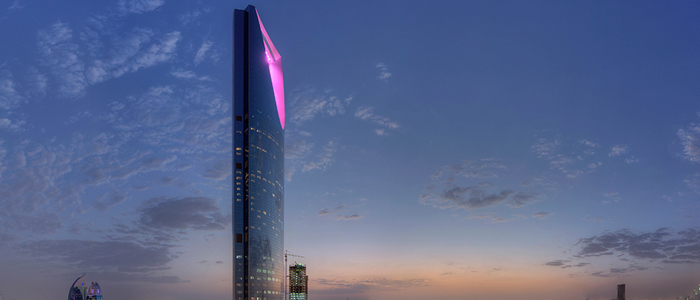
The Saudi economy expanded 4.8% in the third quarter of 2025, compared to the same period last year, with key sectors registering strong growth.
The oil sector rose 8.3% during the year as the OPEC quotas ended, sending Saudi crude exports to a seven-month high. Crude oil exports from the kingdom increased to 6.460 million barrels per day (bpd) in September, slightly higher than August's 6.407 million bpd, and the highest level since February. Refinery crude throughput in Saudi also accelerated to 2.940 million bpd in September, a 1.3% rise from August's 2.902 million bpd, according to the Joint Organizations Data Initiative.
Meanwhile, non-oil activities were up 4.3% while government activities posted a 1.4% increase. On a seasonally adjusted basis, oil activities recorded the highest growth, up 3.3% quarter on quarter (Q-o-Q), according to estimates by the General Authority for Statistics (GASTAT). Government and non-oil activities also jumped 1.1% and 0.6%, respectively, setting up the Saudi economy for a strong finish to the year.
A breakdown of sectors suggests broad-based growth. Petroleum refining soared 11.9% year on year (YoY), while crude petroleum and natural gas rose 7.3%. Electricity, gas and water was up 6.4%, while wholesale and retail trade, restaurants and hotels rose 5.2%.
OTHER INDICATORS
The Consumer Price Index (CPI) rose 2.2% in October 2025 compared to the same month of 2024. This increase was mainly driven by a rise in housing, water, electricity, gas, and other fuel prices by 4.5%; food and beverage prices by 1.5%; and restaurant and accommodation services prices by 1.1%, government data shows.
On the other hand, the prices of furniture, household equipment, and routine household maintenance declined by 0.5%, due to a 4.3% decrease in the prices of furniture, furnishings, and carpets. Similarly, the information and communication division prices recorded a decrease of 0.2%, driven by a 6.3% decline in the prices of information and communication equipment.
The overall unemployment rate, including among Saudis and non-Saudis, stood at 3.2% in the second quarter of 2025, according to GASTAT data. This was up 0.4 percentage points (ppt) from the previous quarter but 0.1 percentage points lower than a year earlier. The overall labour force participation rate was 67.1%, down 1.1 percentage points QoQ and up 0.9 percentage points YoY.
Saudi unemployment rose to 6.8% in the second quarter, an increase of 0.5 percentage points from the first quarter, though 0.3 percentage points lower than in the same period of 2024. The employment-to-population ratio for Saudis fell to 45.9%, down 2.1 percentage points QoQ and 1.3 percentage points YoY.
Unemployment rate among Saudi females rose 0.8 percentage points to 11.3% in the second quarter, compared to the first quarter of 2025.
“Saudi female youth aged 15-24 experienced a 0.8 percentage points decrease in the employment-to-population ratio, reaching 13.8%,” GASTAT stated in its report. Additionally, there was a 1.0 percentage points decrease in the participation rate, reaching 17.4%. Saudi male unemployment rate rose to 4.3% during the period.
BUSINESS SENTIMENT
Saudi Arabia’s non-oil private sector continued to record strong improvement in operating conditions in November, supported by hefty demand, higher output, and companies’ ongoing expansion e orts. Business activity surged at its fastest pace in 10 months, underpinned by increased sales, continued hiring, and higher purchasing levels, according to the latest S&P Global Purchasing Manager’s Index (PMI). The index is derived from five components: new orders, output, employment, suppliers’ delivery times, and stocks of purchases.
However, growth momentum during the month moderated compared with October, particularly in new orders, employment and inventory accumulation. Favourable demand conditions and a steady flow of new orders were key drivers of higher output. Around 30% of firms reported an increase in activity compared with the previous month, while only a small minority recorded a contraction. Growth in new business remained strong, although it eased from October, with demand largely driven by domestic markets. Export orders increased only marginally.
Employment continued to expand as firms responded to higher workloads and rising backlogs, which grew for a fifth consecutive month, the longest such period since 2019. Still, the pace of job creation slowed from the near-record increase seen in October. Purchasing activity also rose, reflecting higher input requirements, though inventory expansion was modest and the weakest in almost three years. Some services firms reported a decline in stock levels.
“Non-oil firms gave their strongest predictions for future activity levels in five months during November,” according to the monthly S&P Global PMI report. “Confidence was typically related to healthy demand pipelines and optimism surrounding business investment.”

MEGA PROJECTS
Beyond the spectacle, the global event will reinforce its host’s commitment to climate responsibility and social cohesion.
SAUDI BUDGET
Growth-oriented expenditures will remain in focus next year, as do investments in social development programmes like education and healthcare.
TECHNOLOGY
Major industry players will collaborate with the kingdom on projects designed to boost the country’s artificial intelligence capabilities and talent pool.
VISION 2030
Many of the strategy’s initiatives have already exceeded expectations and transformed the country’s fiscal and social trajectories.

Your are now leaving this site
Your are now leaving this site
You are about to leave this site. You are being redirected to an external site. Would you like to leave this site?










© SAB, Saudi Arabia. All Rights Reserved, 2025
Saudi Awwal Bank, a listed joint stock company, incorporated in the Kingdom of Saudi Arabia, with paid in capital of SAR 20,547,945,220, commercial registration certificate 1010025779, unified number 7000018668, Mailing Address: P.O. Box 9084, Riyadh 11413. National Address: 7383 King Fahad Branch Rd, 2338 Al Yasmeen Dist., 13325 Riyadh, Kingdom of Saudi Arabia, Tel. +966 11 4050677, www.sab.com, licensed pursuant to the Council of Ministers Resolution No. 198 dated 06/02/1398H and Royal Decree No. M/4 dated 12/08/1398H, and regulated and supervised by the Saudi Central Bank.