
 Security Center
 ATM & Branches
MEGA PROJECTS
|


How can we help?
Filter
Looks like we don’t have any matches for
Try a different search term or check out some of our suggestions below.

Frequently Asked Questions
Have questions about SAB banking services? Let us help you with these frequently asked questions.
FAQS
Customer Service
Our friendly Customer Support team are on hand to help with any queries you have. We're here to help!
Contact Us


EXPO 2030: A LAUNCHPAD FOR SAUDI’S SUSTAINABLE INFRASTRUCTURE
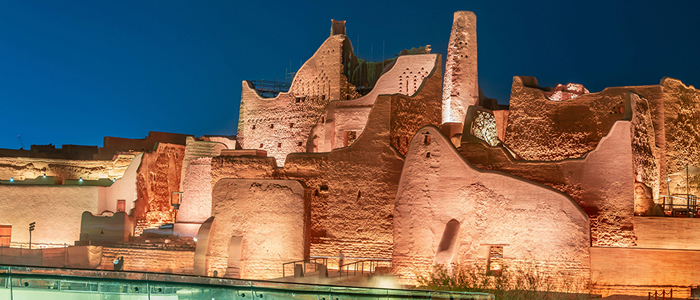
Saudi Arabia’s construction landscape is in the midst of a profound transition, where physical structures are reflective of the dynamic changes underway in the country.
In addition to several giga-projects, other major developments are in the pipeline aimed at improving the standard of living of residents and citizens, creating business opportunities, and contributing to the creation of vibrant places for work and entertainment.
In Riyadh, preparations for Expo 2030 add another layer to this national narrative. The authorities recently awarded Buro Happold a contract to prepare the detailed master plan for the expo, including infrastructure design, landscaping, and facilities, serving as the project’s lead consultant and supporting its sustainable legacy.
The partnership marks a pivotal milestone that reflects Saudi Arabia’s ambition to deliver an exceptional and unprecedented edition of the expo. Under the agreement, Buro Happold will provide an integrated suite of services to develop the detailed master plan, focusing on the requirements of the event and the site’s long-term sustainable legacy afterwards.
ENSURING EXPO 2030’S POSITIVE IMPACT
The company will also carry out detailed design for infrastructure, facilities, landscaping, and outdoor space coordination, as well as provide engineering and technical support during the construction phase. This step will help ensure that the Expo 2030 site is fully prepared in accordance with the highest standards of innovation, sustainability, and operational excellence.
The purpose-built site in North Riyadh is designed to serve both immediate visitors and future generations. Spread across roughly two million square metres, the gated site would deliver an immersive and seamless experience, integrating advanced technologies with sustainability principles. Its design signals a shift in how major world expositions are conceived: not only as temporary showcases, but as foundational investments in long-term urban, cultural, and economic infrastructure.
Smart systems are at the heart of the site’s vision. Artificial intelligence will manage real-time operations across mobility, energy, visitor flows, and environmental controls, creating a city-within-a-city defined by efficiency and responsiveness,Energy systems are planned around sustainable sources, reinforcing the expo’s message of climate responsibility. Architecture across the site will reflect the region’s climate, using shading, passive cooling, and green building standards to reduce heat loads and improve comfort. These elements work together to demonstrate how design and engineering can respond to environmental realities while elevating user experience.
Mobility is central to the master plan through direct connectivity with the Riyadh Metro and a system of shuttle links to key nodes across the capital. The aim is to reduce congestion, enhance accessibility, and ensure that each of the projected 42 million visits can move through the site with minimal friction. The transport framework also reflects Riyadh’s broader transformation into a more connected and transit-oriented city.
What distinguishes Expo 2030 Riyadh, however, is not only its operational sophistication but also its inclusive design philosophy. Saudi Arabia has committed to making the event one of the most accessible and equitable expos ever staged. Countries with limited financial or technical capacity will receive support ranging from pavilion construction services to logistical assistance, planning tools, and advisory expertise. Beyond infrastructure, these countries will be woven into the programming, ensuring visibility in thematic discussions, cultural events, and global storytelling. This approach positions Expo 2030 as a platform where every nation, regardless of income, can participate meaningfully in shaping global solutions.
BLUEPRINT FOR A GLOBAL VILLAGE
The site’s life does not end when the Expo closes on 31 March 2031. A detailed post-expo transformation plan will convert the area into a Global Village, envisioned as a permanent hub for innovation, research, education, and cultural exchange. This ensures that the investments made for the event evolve into ongoing economic and social value, anchoring new industries and knowledge networks within Riyadh’s expanding urban fabric.
The timing of Expo 2030 Riyadh is symbolically and strategically signifi- cant. it coincides with the culmination of global efforts such as the UNSustainable Development Goals, while marking the milestone year for Saudi Arabia’s Vision 2030. As such, the expo will serve as a global checkpoint for the world’s progress toward sustainability, inclusivity, and international cooperation.
LARGE-SCALE PROJECTS
A similar balance is emerging in Diriyah, where construction is underway on a grand mosque, which will anchor a broad urban development. Designed to welcome tens of thousands of worshippers, the mosque is envisioned as both a spiritual centre and a place of civic interaction. By integrating prayer halls with cultural facilities and gathering spaces, the project captures Diriyah’s strategy of weaving religious, cultural, and community functions into a coherent urban experience. It demonstrates how large-scale construction can preserve identity while supporting a growing population.
Jeddah is also undergoing a transformation that combines cultural renewal with urban modernity. In its Historic District, the development of Culture Square demonstrates how built environments can invite public participation and artistic expression. The project includes theatres, digital art experiences, and performance spaces that will transform the lakefront into a destination for residents and visitors alike. It brings together heritage preservation with contemporary creativity, reflecting Jeddah’s long-standing identity as a gateway between cultures. The development encourages community engagement, offering new venues for learning, leisure, and shared experiences.
These construction efforts unfold against a backdrop of rising investor confidence. At Cityscape Global in Riyadh, the sheer volume of real estate deals signed this year illustrates the momentum driving Saudi Arabia’s built environment.
The event saw real estate transactions exceed SAR 237 billion with the participation of major local and international companies. This year's edition welcomed record attendance of 577 exhibitors, including 265 international participants representing leading global companies in real estate development, urban planning, modern construction, and sustainability solutions, reflecting the kingdom's growing position as a global hub for future real estate investment.

ECONOMY
All key economic sectors performed exceptionally well during the quarter, suggesting broad-based growth, as other indicators also lent support.
SAUDI BUDGET
Growth-oriented expenditures will remain in focus next year, as do investments in social development programmes like education and healthcare.
TECHNOLOGY
Major industry players will collaborate with the kingdom on projects designed to boost the country’s artificial intelligence capabilities and talent pool.
VISION 2030
Many of the strategy’s initiatives have already exceeded expectations and transformed the country’s fiscal and social trajectories.

Your are now leaving this site
Your are now leaving this site
You are about to leave this site. You are being redirected to an external site. Would you like to leave this site?










© SAB, Saudi Arabia. All Rights Reserved, 2025
Saudi Awwal Bank, a listed joint stock company, incorporated in the Kingdom of Saudi Arabia, with paid in capital of SAR 20,547,945,220, commercial registration certificate 1010025779, unified number 7000018668, Mailing Address: P.O. Box 9084, Riyadh 11413. National Address: 7383 King Fahad Branch Rd, 2338 Al Yasmeen Dist., 13325 Riyadh, Kingdom of Saudi Arabia, Tel. +966 11 4050677, www.sab.com, licensed pursuant to the Council of Ministers Resolution No. 198 dated 06/02/1398H and Royal Decree No. M/4 dated 12/08/1398H, and regulated and supervised by the Saudi Central Bank.