
 Security Center
 ATM & Branches
SAUDI BUDGET
|


How can we help?
Filter
Looks like we don’t have any matches for
Try a different search term or check out some of our suggestions below.

Frequently Asked Questions
Have questions about SAB banking services? Let us help you with these frequently asked questions.
FAQS
Customer Service
Our friendly Customer Support team are on hand to help with any queries you have. We're here to help!
Contact Us


SAUDI’S 2026 BUDGET REFLECTS MACROECONOMIC STABILITY
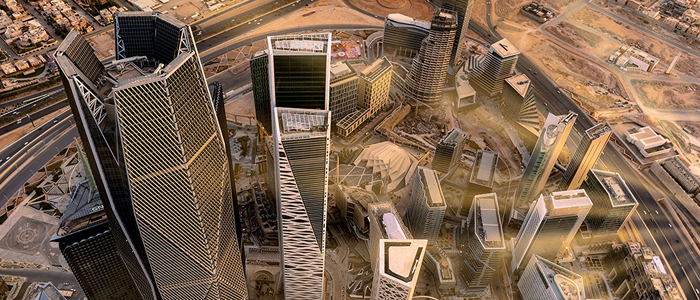
The Saudi Ministry of Finance’s budget statement for fiscal year 2026 highlights the country’s economic transformation marked by greater diversification, innovation, and the investment in promising sectors.
The budget also outlines projected revenues, expenditures, public debt levels, and deficit estimates, while reviewing economic performance during 2025 and priorities for the new year.
The 2026 budget confirms the continuation of strategic spending on development projects in accordance with sectoral strategies and programmes of Saudi Vision 2030, according to Mohammed Aljadaan, minister of finance. In addition, budget spending continues to prioritise economic diversification, business environment improvements, support exports, and the expansion of the scale and diversity of private sector investments.
Preliminary data for 2025 shows the Saudi economy is expected to maintain modest but steady growth. Real GDP is estimated to expand by about 4.4%, supported primarily by a 5% rise in non-oil activities. Private consumption and investment continue to play a central role in driving this momentum. Inflation remains contained at an estimated 2.3%, reflecting fiscal and monetary policy measures aimed at price stability.
For 2026, real GDP growth is projected at 4.6%, again led by the non-oil sectors that underpin the country’s ongoing diversification efforts, according to the Ministry of Finance.
On the fiscal side, revenues for 2025 are expected to reach approximately SAR 1.091 trillion, or about 7.8% below the original budget, mainly due to lower oil prices during the year. Non-oil revenues, however, are set to exceed the budgeted levels, supported by the expansion of non-oil economic activity and ongoing reforms to broaden the revenue base. By 2026, total revenues are projected to rise to around SAR 1.147 trillion, with further growth expected through to 2027 and 2028.
PURPOSE-DRIVEN SPENDING
Expenditures reflect continued support for national strategies, social programmes, and large-scale development initiatives. Spending for 2025 is estimated at SAR 1.336 trillion, roughly 4% higher than budgeted. This reflects investments in infrastructure, essential public services such as education and healthcare, and social protection programmes designed to target beneficiaries more effectively.
The 2026 expenditure projection stands at about SAR 1.313 trillion, rising to SAR 1.419 trillion by 2028. The government notes that its fiscal approach remains flexible, aiming to balance economic support with long-term sustainability.
Health and social development will be the largest sectoral expenditure item, securing SAR 259 billion in the 2026 budget, a 3.5% decline from last year. Military will receive SAR 240 billion, a small 0.3% increase, while general items will get SAR 236 billion, a 1% increase. The general item sector includes expenditures related to the government’s share in retirement pensions and social insurance, contributions to international organisations, government programmes and facilities, the cost of debt, and the management of allocations in addition to providing subsidies to government agencies. Education will get a 1.5% boost to SAR 202 billion.
The 2025 deficit is now estimated at around SAR 245 billion, equivalent to 5.3% of GDP. A narrower deficit of about SAR 165 billion, or 3.3% of GDP, is projected for 2026. The medium-term outlook suggests further gradual reductions as countercyclical policies are adjusted, and revenue diversification strengthens the fiscal base. Borrowing – both domestic and external – will continue in line with the approved financing plan, supporting deficit coverage, debt repayments, and selected capital projects. Public debt is expected to reach SAR 1.457 trillion in 2025 and SAR 1.622 trillion in 2026, representing just over 32% of GDP.
INVESTMENT STRATEGY
Economic diversification remains a central theme across the Ministry of Finance budget statement. Private sector growth continues to expand under updated investment regulations and initiatives aimed at increasing competition and reducing barriers.
The investment strategy seeks to raise the private sector’s contribution to GDP to 65% by 2030. Institutions such as the Public Investment Fund and the National Development Fund remain active in supporting strategic sectors, including renewable energy, digital infrastructure, tourism, entertainment, and sports. These investments contribute to both immediate economic activity and longer-term structural change.
The budget also highlights sector-specific progress. Tourism has surpassed key Vision 2030 benchmarks, with more than 100 million visitors recorded in 2023 and a revised target of 150 million by 2030. Initiatives in entertainment and sports aim to attract international events and expand domestic participation, further broadening the kingdom’s economic base.
Overall, the 2026 budget frames a period of stable economic performance, continued diversification, and measured fiscal management. The government’s priority remains balancing growth-oriented spending with long-term fiscal sustainability while supporting emerging sectors and maintaining macroeconomic stability

ECONOMY
All key economic sectors performed exceptionally well during the quarter, suggesting broad-based growth, as other indicators also lent support.
MEGA PROJECTS
Beyond the spectacle, the global event will reinforce its host’s commitment to climate responsibility and social cohesion.
TECHNOLOGY
Major industry players will collaborate with the kingdom on projects designed to boost the country’s artificial intelligence capabilities and talent pool.
VISION 2030
Many of the strategy’s initiatives have already exceeded expectations and transformed the country’s fiscal and social trajectories.

Your are now leaving this site
Your are now leaving this site
You are about to leave this site. You are being redirected to an external site. Would you like to leave this site?










© SAB, Saudi Arabia. All Rights Reserved, 2025
Saudi Awwal Bank, a listed joint stock company, incorporated in the Kingdom of Saudi Arabia, with paid in capital of SAR 20,547,945,220, commercial registration certificate 1010025779, unified number 7000018668, Mailing Address: P.O. Box 9084, Riyadh 11413. National Address: 7383 King Fahad Branch Rd, 2338 Al Yasmeen Dist., 13325 Riyadh, Kingdom of Saudi Arabia, Tel. +966 11 4050677, www.sab.com, licensed pursuant to the Council of Ministers Resolution No. 198 dated 06/02/1398H and Royal Decree No. M/4 dated 12/08/1398H, and regulated and supervised by the Saudi Central Bank.