Search
 Security Center
 ATM & Branches
ECONOMY

How can we help?
Filter
Looks like we don’t have any matches for
Try a different search term or check out some of our suggestions below.

Frequently Asked Questions
Have questions about SAB banking services? Let us help you with these frequently asked questions.
FAQS
Customer Service
Our friendly Customer Support team are on hand to help with any queries you have. We're here to help!
Contact Us


HOW 10 YEARS OF VISION 2030 RESHAPED SAUDI ARABIA
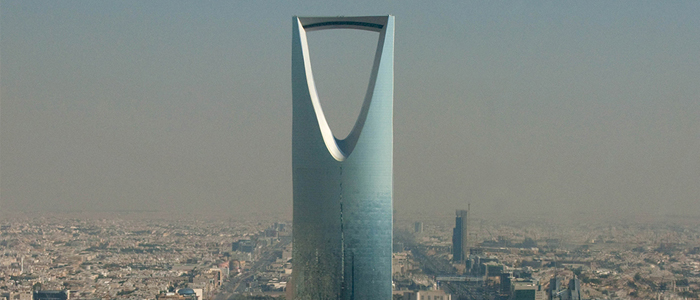
Saudi Arabia's economy grew faster than expected in 2025, and for the first time in the Vision 2030 programme's history, non-oil activities now account for more than half of GDP – a milestone the kingdom has been pursuing since the initiative was launched a decade ago, according to the Vision 2030 Annual Report for 2025.
Real GDP growth hit 5.7%, its strongest pace in three years, driven by a 4.9% expansion in non-oil activity even as oil output remained volatile, the Vision 2030 report stated. Unemployment among Saudi nationals fell to the current 7.2% from 12.3% in 2016. Today, 2.6 million Saudis are working in the private sector, up from 1.7 million in 2020. This reflects sustained e orts to localise jobs, upskill national talent, and make private sector careers more attractive.
“The transformation has been especially profound for Saudi women. Female labour force participation has reached 35%, closing in on the 40% target set for 2030 and marking a dramatic rise from the baseline of 22.8%,” according to the Saudi Press Agency. The progress is the result of deliberate policy choices, such as expanded childcare support, flexible work arrangements, transportation reforms, and initiatives that opened entire sectors to women for the first time. Women are not only entering the workforce in greater numbers, but they are leading it, with 43.9% of middle and senior management positions now held by them. Meanwhile inflation stayed at a modest 2%, a combination of growth and price stability for the emerging economy. Credit ratings have improved in step, and non-oil exports climbed to USD 166 billion, up from USD 64.6 billion in 2016 – a signal that diversification is showing up in trade data.
MAJOR MILESTONES
The annual report identified some key milestones: Vision 2030 tracks 390 indicators, of which 309 have either hit or exceeded their interim targets and 52 more sit within striking distance, in the 85%-99% range. Of 1,290 initiatives launched since 2016, 225 are complete and 935 remain on track. The government is keen to advertise a 90% delivery rate for these initiatives as the programme heads into its third and final five-year phase in 2026.
Tourism is among the many success stories of Vision 2030. The country attracted 123 million visitors in 2025, including more than 30 million from abroad, generating USD 81 billion in tourism spending. That has surpassed the original 100-million target years ahead of schedule, prompting the kingdom to raise its 2030 ambition to 150 million visitors, which is reinforced by hosting rights for Expo 2030 and the 2034 FIFA World Cup.
Private sector participation is also deepening. SME employment reached 8.88 million workers against a 7.55-million target, while the homeownership rate rose to 66.24%, ahead of its 65% goal and continuing a climb that began in 2017. Adult physical activity, underscoring quality-of-life reforms, hit 59.1%, versus a 55% target, which is a marked shift from a decade ago.
The report notes that investment is now being phased "in line with long-term sustainability and strategic return," with programmes adjusted within a tighter fiscal framework. Phase three, starting in 2026, is billed as a shift from building capacity to proving returns.
“As the kingdom moves into the third phase of Vision 2030, the focus is clear: sustain momentum and delivery against national priorities,” the report notes.
LEADING INDICATORS
Saudi Arabia’s non-oil activities grew 0.6% on an annual basis, while real GDP contracted 4.8%, driven by a drop in oil activities in the second quarter of 2026, according to the latest General Authority for Statistics (GASTAT) data.
However, business confidence remains promising. GASTAT’s Business Confidence Index (BCI) remains at optimistic levels in July 2026, recording 56.5 points, despite a slight decline of 0.03 points compared with June 2026, when it stood at 56.6. The index reflects prevailing optimism in the business sector, supported by establishments' confidence in the stability of economic activity and continued growth across various sectors.
In terms of short-term business indicators, the Operating Revenues Index increased by 11.4% year on year in May. It was driven by a 9.6% increase in manufacturing activities, a 38.7% rise in mining and quarrying activities, a 3.6% growth in wholesale and retail trade and repair of motor vehicles activities. Construction activities and financial and insurance activities also expanded 2.5% and 12.9%, respectively, GASTAT data shows.

GAMING
The industry can accelerate the development of a digitally skilled workforce, expand the local intellectual property, and promote technological innovation.
ISLAMIC FINANCE
The region accounts for more than 40% of global sukuk issuance, with the kingdom becoming one of the most significant issuers worldwide.
NIDLP
The National Industrial Development and Logistics Program has helped facilitate the non-oil sectors’ growing GDP contribution and generate greater interest from investors.
RENEWABLE ENERGY
Sustainable resource management allowed the country to increase access to safe drinking water while reducing consumption of non-renewable groundwater.

Your are now leaving this site
Your are now leaving this site
You are about to leave this site. You are being redirected to an external site. Would you like to leave this site?