Search
 Security Center
 ATM & Branches
ISLAMIC FINANCE

How can we help?
Filter
Looks like we don’t have any matches for
Try a different search term or check out some of our suggestions below.

Frequently Asked Questions
Have questions about SAB banking services? Let us help you with these frequently asked questions.
FAQS
Customer Service
Our friendly Customer Support team are on hand to help with any queries you have. We're here to help!
Contact Us


SAUDI LEADS SUKUK ISSUANCES IN THE GCC REGION
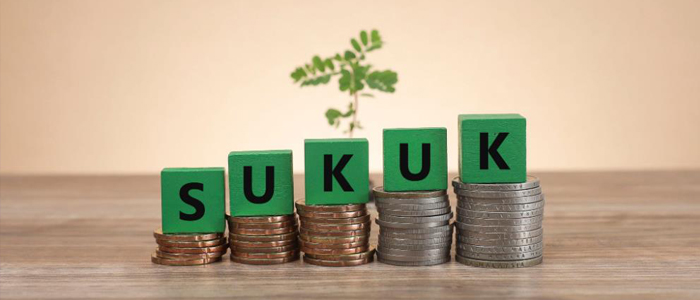
Saudi Arabia was the GCC region’s leading issuer of sukuk in the first four months of the year, according to the latest Islamic Finance report by S&P Global Ratings.
In the first four months of 2026, the volume of sukuk issuance by GCC countries increased by 13.1% year on year, underpinned primarily by local currency issuance in Saudi Arabia, S&P noted. “Overall, global sukuk issuance expanded by 20% in the first four months of 2026, with Malaysia, Türkiye, and Indonesia also contributing. The resolution of the Middle East war will determine whether or not this trend continues, as the GCC accounted for 45% of global sukuk issuance in 2025,” the report noted.
Saudi Arabia has become one of the most significant issuers of sukuks globally. Sukuks are a critical part of the kingdom’s e orts to develop its local debt market. The National Debt Management Centre (NDMC), which manages the sovereign issuance programme, raised 119 billion through domestic issuances, including a 60 billion Liability Management (LM) transaction. In addition, it raised USD-denominated sukuk issuance of 20.6 billion, as part of its international debt market issuance programme.
“Growth opportunities extend beyond core lending into capital markets and investment banking, as increasing sukuk issuance and the deepening capital market create additional fee income streams,” S&P stated in a separate report, citing the development of structured products – such as residential mortgage-backed sukuk by Saudi Real Estate Refinance Co. – alongside advances in Islamic fintech and sustainable finance, that it said will further broaden revenue and funding sources.
ISLAMIC FINANCE DEVELOPMENTS
S&P Global Ratings expects the growth of the global Islamic finance industry to slow in 2026, to about 5%-10%, as a result of geopolitical tensions, following an expansion of 10.2% in 2025. Weaker fiscal balances are also expected in several regional countries, as higher oil prices will only partially o set the impact of significantly reduced oil production and exports. This will likely be financed by a combination of liquid asset usage and debt issuance, particularly through private placements.
“In 2025, the Islamic finance industry continued its double-digit growth, with total assets expanding by 10.2% versus 2024, supported by the growth in banking assets and the sukuk industry,” S&P noted. “Islamic banking asset expansion contributed to about 74% of the industry growth in 2025, compared with 54% in 2024. Overall, the GCC accounted for two-thirds of banking asset growth in 2025, with Saudi Arabia and the UAE as the chief contributors owing to Vision 2030-related projects and the UAE’s strong economic performance.”
Saudi Arabia’s Islamic banks are also enjoying strong growth. The kingdom’s Islamic banks benefit from a strong retail franchise, which supports a robust and relatively stable deposit base. Customer deposits accounted for approximately 87% of Islamic banks’ funding by the first quarter of 2026, compared with 82% for conventional banks. Wholesale funding remained more contained, at about 14%, versus 21% for conventional banks, despite the faster expansion of Islamic banks.
The share of customer deposits edged higher by the first quarter of 2026 as banks reduced their reliance on wholesale funding after global tensions. Domestic deposit growth accelerated, particularly from the public sector, while rising interbank funding costs provided an additional incentive to rely on deposits.
Saudi Islamic banks also hold a smaller proportion of liquid assets, at 15.2% of total assets as of the first quarter of 2026, compared with 17.7% for conventional banks, S&P noted. This partly reflects the more limited availability of Shariah-compliant investment instruments, alongside rapid loan growth that has outpaced the accumulation of liquid assets. Islamic banks nevertheless maintain higher cash balances and cash held with the central bank, at close to 5% of total assets, compared with 3.7% for conventional banks.
As Islamic finance evolves from a funding source into a connector of capital, trade, and investment across fast-growing markets, Saudi Arabia and the wider Gulf region have the potential to be a pivotal hub in the next phase of the sector’s development.
ISLAMIC FINANCE OPPORTUNITY
A recent report estimates global Islamic finance assets at around USD 6 trillion, with GCC-centred corridors increasingly linking liquidity-rich markets with opportunities across Asia and Africa. Saudi Arabia is well positioned to capture this shift, given the scale of its Islamic banking market, deep domestic liquidity and investment ambitions under Vision 2030.
The opportunity extends beyond traditional banking and sukuk into infrastructure, private credit, trade finance and digital assets. Globally, only 6% of sukuk capital currently reaches South Asia and Africa, highlighting the potential to channel more GCC liquidity into capital-hungry markets.
For Saudi financial institutions, stronger cross-border capabilities could help connect domestic capital with new trade and investment corridors, while supporting the kingdom’s broader role as a regional financial and commercial hub.

ECONOMY
The ambitious strategy was the push the country needed to transform and future-proof its economy in a fast-shifting global financial landscape.
GAMING
The industry can accelerate the development of a digitally skilled workforce, expand the local intellectual property, and promote technological innovation.
NIDLP
The National Industrial Development and Logistics Program has helped facilitate the non-oil sectors’ growing GDP contribution and generate greater interest from investors.
RENEWABLE ENERGY
Sustainable resource management allowed the country to increase access to safe drinking water while reducing consumption of non-renewable groundwater.

Your are now leaving this site
Your are now leaving this site
You are about to leave this site. You are being redirected to an external site. Would you like to leave this site?