Search
 Security Center
 ATM & Branches
AGRICULTURE


How can we help?
Filter
Looks like we don’t have any matches for
Try a different search term or check out some of our suggestions below.

Frequently Asked Questions
Have questions about SAB banking services? Let us help you with these frequently asked questions.
FAQS
Customer Service
Our friendly Customer Support team are on hand to help with any queries you have. We're here to help!
Contact Us


FARMLAND INVESTING BRINGS SAUDI CLOSER TO ITS FOOD SECURITY GOALS
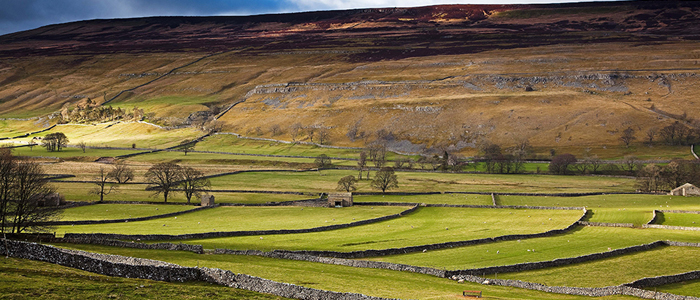
Saudi Arabia farmlands are in full bloom. Strong production of fruits, vegetables, and agri-food is steadily making the kingdom self-su cient in several commodities.
The General Authority for Statistics (GASTAT), citing latest available data from the Food Security Statistics, reported that self-su ciency ratios recorded notable increases across several products. Onion yields, for example, increased by approximately 41.2%, while tomatoes were up 9.2%. Fish recorded an increase of 8.2%, whereas poultry meat showed a 1.4% rise in self-su ciency. In addition, the kingdom achieved self-su ciency levels exceeding 100% for several plant and animal products in 2024. Self-su ciency reached 121% for dates, 131% for dairy products, 103% for table eggs, 102% for okra, and 101% for cucumbers.
It is a strong foundation to build on through investment and innovative technologies. In July, the government launched a tropical fruits and greenhouses project in Jazan Region with investments exceeding 600 million. The project is an extension of the Jazan Region Development Strategic O ffice’s e orts to enable and attract high-quality investments, promote sustainable development, and capitalise on the region's abundant agricultural resources.
It is one of the largest protected agriculture projects in the region. Developed by Amtar Al Khair Agricultural Crops Company in partnership with KUBO, a Dutch company and one of the world's leading providers of greenhouse and smart farming technologies, the project will facilitate the transfer of global expertise and application of the latest agricultural technologies into the local market.
The project comes as part of the e orts of the strategic o ce to enable high-quality investment partnerships and attract global expertise to the region, contributing to the development of the agricultural sector, improving e ciency, and enhancing its competitiveness.
SUSTAINABLE FARMING
Covering a total area of one million square metres (sqm), including 500,000 sqm of high-tech greenhouses and 500,000 sqm of land dedicated to tropical fruit production, it will further strengthen agricultural investment in Jazan Region.
Leveraging advanced protected agriculture systems, the project features smart solutions for greenhouse climate management, closed-loop irrigation systems, and water recycling technologies, which would reduce water consumption by up to 75%.
The kingdom’s fisheries sector is also expanding. The Fisheries and Aquaculture Statistics 2025 showed that the total production reached approximately 289,900 tons, distributed between aquaculture and marine fisheries in the past year. Production from aquaculture projects reached 192,400 tonnes, recording a growth rate of 19% compared to 2024, while the quantity of catch from marine fisheries reached 97.6 thousand tonnes, an increase of 14.4% compared to 2024.
DATES EXPORTS
The kingdom is one of the world’s largest producers of dates. Dates is also one of the country’s largest agricultural export products, and forms part of its broader strategy to expand non-oil exports and increase the contribution of agriculture to economic growth.
Saudi Arabia's date exports reached a record 1.94 billion in 2025, rising 14.3% from the previous year and nearly 60% higher than in 2021, underscoring the sector's continued expansion and growing international demand.
The increase reflects higher export volumes, expanded market access and continued investment in production and quality standards.
According to the Ministry of Environment, Water and Agriculture, Saudi Arabia now exports dates to more than 125 countries. Production exceeded 1.9 million tonnes in 2025, supported by a domestic date palm population of more than 37 million trees.
The Saudi Arabian dates market was valued at an estimated USD 4.9 billion in 2025 and is projected to reach USD 7 billion by 2030, growing at a compound annual growth rate (CAGR) of 7.3%, according to research by MarkNtel Advisors.
The growth is being driven by a combination of factors, including rising domestic and international demand, government support for improving cultivation practices, and the increasing adoption of precision agriculture, smart farming technologies, and sustainable production methods. Domestic demand also remains strong, supported by the country's status as an Islamic hub and destination for Muslims globally.
AGTECH PROGRAMME
The Saudi government has also increased investment in agricultural infrastructure and export development through agencies such as the Agricultural Development Fund (ADF). The fund is expanding its role in modernising Saudi agriculture by directing financing toward technologies that improve water e ciency, energy use, and long-term productivity.
Since launching its AgriTech financing programme in 2018, the fund has committed 8.7 billion to projects adopting advanced agricultural technologies – representing nearly 30% of its total financing of 29 billion through 2025. Alongside financing, the fund is working with government agencies, private companies and research institutions to accelerate the adoption of modern farming practices, supporting Saudi Arabia's broader objectives of strengthening food security, improving resource e ciency, and building a more resilient agricultural sector.

ECONOMY
Strong business sentiment, declining unemployment figures, and stable sovereign credit rating have buoyed the country amidst challenging market conditions.
INDUSTRIAL SECTOR
More than half of national GDP in 2025 was generated by manufacturing, mining, energy, and logistics, underscoring their importance in the diversification strategy.
MANUFACTURING
Shared infrastructure and supply chains have allowed various industries in the kingdom to maximise resources and funding opportunities.
SAUDI EXCHANGE
Investors were able to hold their nerve, prompted by strong corporate earnings and the positive impact of ongoing economic reform policy in Saudi.

Your are now leaving this site
Your are now leaving this site
You are about to leave this site. You are being redirected to an external site. Would you like to leave this site?