Search
 Security Center
 ATM & Branches
MANUFACTURING
-
Wealth Management
-
- Apply Now for SAB Credit Card
- Apply for a Credit Card (Non-SAB customer)
- Miles Credit Cards
- ICSAB Credit Cards
- SAB VISA Cashback Credit Card
- SAB noon VISA Credit Card
- Special Offers
- AQSAT - Installment Plans
- SAB Privileges and Security
- Credit Card Payments
- Valet Services
- AQSAT Credit Card
- Airport Transfer
- Car Services
-
Low Limit Credit Cards
-
Debit Cards
-
Prepaid Card
-
ICSAB+
-
Finance
-
Help & Support
-
- e-Account opening
- SAB Online
- SAB Mobile
- SAB Phone
- SAB 360°
- SAB Store
- eForms
- Update your Information Online
- Branches & ATM Locator
- Self Service Machines
- Verify Digital Bank Documents
- E-Statement
- SMS Notification Service
- Audio Forms
- Appointment Booking
- Voice Guidance ATMs
- Handicap Branches
- Customer Awareness
-
Help & Support
-
Cards
-
-
-
Tools & Resources
-
Ways to Bank
-
Help & Support
-
ESG at SAB
-
Security
-

How can we help?
Filter
Looks like we don’t have any matches for
Try a different search term or check out some of our suggestions below.

Frequently Asked Questions
Have questions about SAB banking services? Let us help you with these frequently asked questions.
FAQS
Customer Service
Our friendly Customer Support team are on hand to help with any queries you have. We're here to help!
Contact UsQuick Links
Filters


SAUDI BUILDS NEW PATH TO OPTIMISE PRIVATE SECTOR INVESTMENT
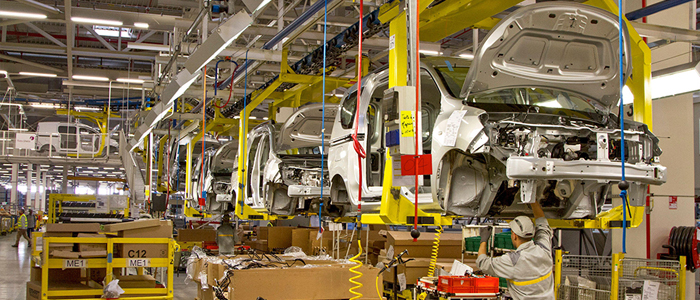
The integration between industrial development and logistics infrastructure is becoming a defining feature of Saudi Arabia's economic strategy. Rather than developing sectors independently, the government is increasingly linking manufacturing, mining, transportation, and energy investments through shared infrastructure and supply chains.
Completed private sector investments across the kingdom’s manufacturing, industrial, and related sectors reached 775 billion in 2025. Financing also continued to grow, with cumulative loan approvals by the Saudi Industrial Development Fund reaching 246 billion. Meanwhile, cumulative credit facilities extended by the Saudi Export-Import Bank increased to 116 billion, supporting exporters and industrial companies.
Buttressed by the kingdom’s robust infrastructure, manufacturing remained one of the best performing sectors, expanding by 6% last year. Machinery and electrical equipment became the country’s largest non-oil export category at 80.9 billion, narrowly ahead of chemical products at 80.3 billion. Metals and fabricated metal products generated 25.5 billion in exports, while food and beverage exports totalled 11.2 billion. All told, non-oil exports’ value reached 622.9 billion in 2025, an increase of 14% from the previous year.
Mining also recorded significant progress. Saudi Arabia entered the world’s top 10 destinations for mining investment attractiveness in 2025, continuing a decade-long improvement that has seen the country climb 94 places since 2013. The report estimates Saudi Arabia's mineral resources valued at approximately 9.4 trillion, reinforcing the sector's importance in the country's diversification strategy.
Industrial capacity continued to expand alongside these developments. By the end of 2025, Saudi Arabia had 12,946 industrial facilities in operation, while the number of ready-built factories increased to 1,511. Cumulative private sector investment across industrial cities, economic cities and special zones reached 1.466 trillion.
SECTOR CONSOLIDATION
In July, the government consolidated oversight of the energy, industry, and mineral resources portfolios under energy minister Prince Abdulaziz bin Salman, signalling closer coordination between industrial development, mining, and energy policy. The restructuring reflects the government's continued emphasis on industrial expansion as part of broader economic diversification efforts.
The Ministry of Industry and Mineral Resources also issued 322 new industrial licenses in April 2026, while 188 new factories commenced production during the same month, according to the latest report by the ministry’s National Center for Industrial and Mining Information.
The volume of investments associated with the new licenses exceeded 12.33 billion. These projects are expected to create more than 2,977 job opportunities across various regions of the kingdom, the report noted.
“Investments in factories that began production during April totalled 2.01 billion, generating 3,606 new jobs, reflecting the continued expansion of the kingdom's industrial base and the increasing pace of factories entering actual operation,” the report stated.
Another significant development is the continued growth of the automotive manufacturing industry. Saudi electric vehicle manufacturer Ceer signed a series of localisation agreements worth 3.7 billion to increase domestic production of automotive components and expand the country's supplier network. The agreements involve both Saudi and international companies and are intended to support the development of a domestic electric vehicle ecosystem while increasing local content across the automotive value chain.
The "Made in Saudi" programme also continued to encourage domestic manufacturing by promoting locally produced goods and supporting exporters seeking international markets. Since its launch, the initiative has aimed to increase the competitiveness of Saudi products while encouraging companies to expand local production and improve manufacturing standards.

ECONOMY
Strong business sentiment, declining unemployment figures, and stable sovereign credit rating have buoyed the country amidst challenging market conditions.
AGRICULTURE
Investments in sustainable greenhouses and smart farming technologies are already bearing fruit for the kingdom as its food self-su ciency ratio rises.
INDUSTRIAL SECTOR
More than half of national GDP in 2025 was generated by manufacturing, mining, energy, and logistics, underscoring their importance in the diversification strategy.
SAUDI EXCHANGE
Investors were able to hold their nerve, prompted by strong corporate earnings and the positive impact of ongoing economic reform policy in Saudi.

Your are now leaving this site
Your are now leaving this site
You are about to leave this site. You are being redirected to an external site. Would you like to leave this site?