Search
 Security Center
 ATM & Branches
INDUSTRIAL CLUSTERS

How can we help?
Filter
Looks like we don’t have any matches for
Try a different search term or check out some of our suggestions below.

Frequently Asked Questions
Have questions about SAB banking services? Let us help you with these frequently asked questions.
FAQS
Customer Service
Our friendly Customer Support team are on hand to help with any queries you have. We're here to help!
Contact Us


INDUSTRIAL CLUSTERS CREATE AN FDI GROWTH ROADMAP FOR SAUDI
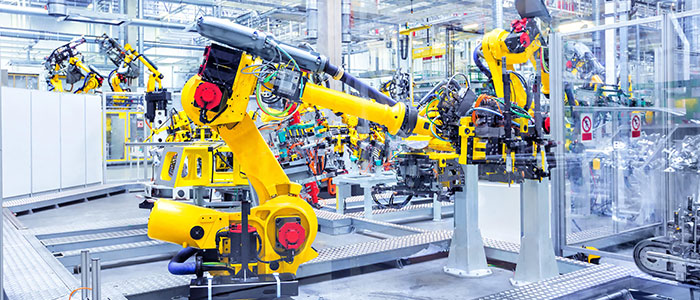
The Saudi Authority for Industrial Cities and Technology Zones (MODON) delivered strong results, attracting more than 12 billion in new foreign investment last year, doubling the amount recorded in 2024.
The growth reflects the increasing appeal of Saudi Arabia’s industrial cities to global investors and supports MODON’s ambition for the country to become a preferred destination for domestic and international investment, as well as a leading partner for the industrial, technology and logistics ecosystem. MODON’s work aligns with the objectives of the National Industrial Strategy and the broader ambitions of Vision 2030.
Established in 2001, MODON oversees industrial cities, technology zones, and private industrial cities across the kingdom. Its responsibilities include planning, developing, and operating industrial cities, alongside providing integrated services and products to domestic and international investors. Its strategy of developing infrastructure and attracting investment supports the country’s industrial expansion, strengthens the ecosystem around manufacturing and logistics, and contributes to the wider economic diversification objectives of Vision 2030.
The increase in foreign investment in MODON last year coincided with a rise in new domestic capital, which reached 18 billion. Total investment attracted in 2025 therefore amounted to around 30 billion, up 25% from the previous year. Growth was driven by new projects across the industrial, technology, services, and logistics sectors, reflecting the expanding role of industrial cities in supporting economic diversification and private sector development.
Industrial investment accounted for the largest share, reaching 22 billion, an increase of 16%, supported by new production projects and the expansion of factory capacity and ready-built industrial units. MODON currently offers 2,244 ready-built units. Technology investment also recorded substantial growth, exceeding 7 billion, up 140%. Investment in services reached 748 million, an increase of 23%, while logistics investment totalled 553 million, up 35%. These gains reflect rising demand for infrastructure, supply chain capabilities, and support services required by businesses operating in industrial cities.
EXPANDING CAPACITY
To accommodate this investment, MODON continued to expand its industrial land and infrastructure. Developed land reached 236 million square metres (sqm) in 2025, an increase of 8% compared with 2024. Electricity capacity rose by 12% to 8,959 megavolt-amperes (MVA), while the number of drinking-water purification plants increased by 13% to 34. Natural gas supply also expanded, rising 37% to 195 million cubic feet per day. These investments in industrial infrastructure are intended to strengthen operational capacity, support new production facilities, and enable existing businesses to expand.
The number of establishments operating across MODON’s industrial cities increased by 11% to 9,557, covering industrial, logistics, and investment facilities. This expansion points to a growing industrial base and the authority’s capacity to accommodate a broader range of specialised investments. By developing industrial land, improving infrastructure, and offering integrated services, MODON plays a central role in creating the conditions for manufacturers and related businesses to establish operations, scale production, and connect with domestic and international supply chains.
JUBAIL AND YANBU ON THE MOVE
Meanwhile, Saudi Arabia’s well-established Royal Commission for Jubail and Yanbu (RCJY) is aiming to attract investments worth 2 trillion over the next five years, bringing forward a target originally set for 2045. The commission’s existing investments have already exceeded 1.5 trillion, while a pipeline of opportunities worth approximately 500 billion is under discussion with investors across several sectors.
Investment growth in the economic zone reached 4% in 2025, surpassing the commission’s target of 3%. Growth is expected to continue in 2026, supported by Saudi Arabia’s efforts to strengthen market stability, develop industrial infrastructure and attract higher value investment. The Red Sea industrial centres of Yanbu and Jazan are expected to benefit from opportunities in oil-related products, fertilisers, and petrochemicals.
RCJY oversees four industrial cities covering a combined area of 2,175 square kilometres (sq km) and home to approximately 380,000 residents. These include Jubail Industrial City, Yanbu Industrial City, Ras Al-Khair Industrial City, and Jazan City for Primary and Downstream Industries. Together, they form a significant part of the kingdom’s industrial base and its efforts to diversify economic activity beyond oil.
The commission is also broadening its investment priorities beyond its traditional core industries. Logistics and downstream manufacturing are emerging areas of focus, with opportunities to build on existing industrial clusters and improve connections between production facilities, transport networks and export markets.
The shift supports Saudi Arabia’s ambition to become one of the world’s leading logistics hubs. The kingdom has around 24 operational logistics centres, while customs clearance times had fallen from nine hours to less than two hours. Cargo volumes grew 32% in 2025, placing Saudi Arabia second among G20 countries for growth in this measure.
Advanced infrastructure, joint clean energy investments with the Ministry of Energy, financial incentives, and competitive operating costs are among RCJY’s tools for attracting investors. The commission is also pursuing digital transformation, including the development of smart industrial cities and wider adoption of Fourth Industrial Revolution technologies in factories. These initiatives are intended to strengthen industrial competitiveness and support the accelerated investment ambitions of Vision 2030.

ECONOMY
Economic reforms implemented as part of Vision 2030 have allowed the country to diversify its revenue streams and cushion the geopolitical challenges.
REAL ESTATE
The sector continues to attract large-scale capital for both residential and commercial properties across the country.
WORKFORCE
Reforms introduced by the government have redefined the country’s private sector, creating a new talent source and diversifying workplace participation.
SMEs
Giving small businesses the resources to expand will deliver tangible benefits including job creation, higher GDP contribution, and global competitiveness.

Your are now leaving this site
Your are now leaving this site
You are about to leave this site. You are being redirected to an external site. Would you like to leave this site?