Search
 Security Center
 ATM & Branches
REAL ESTATE


How can we help?
Filter
Looks like we don’t have any matches for
Try a different search term or check out some of our suggestions below.

Frequently Asked Questions
Have questions about SAB banking services? Let us help you with these frequently asked questions.
FAQS
Customer Service
Our friendly Customer Support team are on hand to help with any queries you have. We're here to help!
Contact Us


RISING CONSTRUCTION COSTS FAIL TO DAMPEN OUTLOOK ON SAUDI REAL ESTATE
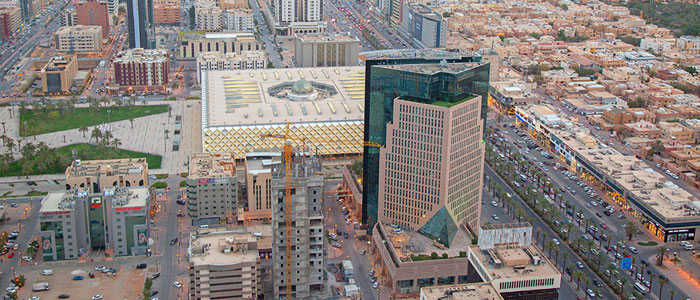
Saudi Arabia's construction costs rose 2.3% year on year in August 2026, matching July and down from a June peak of 2.7%. The index has climbed from 0.7% a year earlier, according to latest data from the General Authority for Statistics (GASTAT).
Monthly change in the Construction Cost Index (CCI) was 0.1% between August and July. Non-residential costs rose 2.6% and residential costs were up 2.1%. Equipment and machinery rental was the biggest driver, up 4.1% for residential and 5.8% for non-residential work, with rental of equipment and machinery with an operator soared by 5.6% (residential) and 7.2% (non-residential). Energy rose 3.0% in both segments and basic materials increased 1.8%, with metal products up 2.0% in residential work. This puts residential labour costs up 1.5%, according to GASTAT data, while non-residential labour accelerated by 2.0% during the period.
Real estate prices rose 1.3% year on year in the second quarter, and 3.0% on the previous quarter, according to GASTAT.
The annual charts show readings had slipped below zero in the preceding quarters, so the second quarter marks a turn. Gains were uneven. Residential prices jumped 2.6% and agricultural prices surged 11.3%, while commercial prices – representing 25.4% of the index – fell 3.2%. Within residential, land rose 6.3%, apartments 1.1%, and floors 0.4%, while villas fell 9.7%. In commercial, plots fell 3.5% and buildings slipped 0.6%, while exhibitions and shops edged up 0.4%.
Regional results varied widely. Al-Jawf (+10.4%) and Northern Borders (+4.6%) were in the lead, followed by Riyadh (+4.2%) and Makkah (+0.4%). Hail (-10.1%), Qassim (-5.4%), Madinah (-4.5%) and Al-Baha (-2.8 %) declined.
NEW ERA FOR REAL ESTATE
Saudi Arabia’s real estate market is entering a new phase as large-scale investment, economic diversification, and regulatory reforms translate into construction activity, commercial demand, and new investment opportunities. However, softer residential transactions and rising development costs highlight the challenges of sustaining growth across the sector.
According to CBRE’s Saudi Arabia Real Estate Market Review for Q2 2026, Riyadh remained a major investment destination, alongside substantial project activity in Makkah, Madinah, the Eastern Province, and Aseer.
Riyadh’s office market is one of the strongest segments, supported by multinational companies establishing regional headquarters, and expansion in technology, healthcare, financial services, and consulting activities.
More than 780 international companies had obtained licences under the regional headquarters programme. The capital’s office stock exceeded six million square metres (sqm) of gross leasable area in the second quarter, with occupancy at 97%. Prime office rents increased 3% year on year to approximately 3,320 per sqm annually.
Around 600,000 sqm of new office space is expected in 2026, including approximately 200,000 sqm of Grade A accommodation. Nevertheless, limited availability in premium business districts continues to encourage competition for space and advance leasing. Higher construction and equipment costs could also delay new deliveries.
The residential market presents a more mixed picture. Transaction values fell 26.9% year on year to 37.67 billion in Q2, while the number of transactions declined 14.2%. Yet underlying prices varied by property type: land prices increased 6.3% nationally, and apartment values rose 1.1%, while the value of villas fell 9.7%, reflecting a shift towards smaller and more affordable homes.
The introduction of a new framework governing non-Saudi property ownership is an important structural development. It opens designated areas to international buyers and provides new avenues for foreign investment in residential and commercial assets. Implementation, however, will depend on the applicable ownership rules, eligible locations, and transaction requirements.
RETAIL DEMAND
Retail demand is being supported by consumer spending, tourism, and the expansion of entertainment offerings. Approximately 400,000 sqm of additional retail space is scheduled for delivery by the end of 2026. Despite the pipeline, vacancy rates remained around 6%, while prime rents in leading super-regional malls held at approximately 3,275 per sqm, the CBRE report shows.
Developers are increasingly focused on destinations that combine shopping with dining, entertainment, and leisure rather than relying solely on conventional retail formats.
Saudi Arabia’s real estate opportunity remains substantial, but the market is becoming more differentiated. Office and industrial assets benefit from strong occupier demand, while residential affordability and hospitality supply absorption warrant closer attention. Retail performance will depend on consumer demand and the ability of new destinations to attract visitors.
For investors, the next phase will be less about the scale of announced projects and more about delivery, occupancy, sustainable rental income, and capital discipline. Continued public investment and regulatory reform provide important support, but execution risks, and affordability pressures will shape how effectively the kingdom converts its ambitious development pipeline into durable real estate returns.

ECONOMY
Economic reforms implemented as part of Vision 2030 have allowed the country to diversify its revenue streams and cushion the geopolitical challenges.
INDUSTRIAL CLUSTERS
Economic zones have seen double-digit growth in foreign direct investment, lending further support to the country’s diversification initiatives.
WORKFORCE
Reforms introduced by the government have redefined the country’s private sector, creating a new talent source and diversifying workplace participation.
SMEs
Giving small businesses the resources to expand will deliver tangible benefits including job creation, higher GDP contribution, and global competitiveness.

Your are now leaving this site
Your are now leaving this site
You are about to leave this site. You are being redirected to an external site. Would you like to leave this site?