Search
 Security Center
 ATM & Branches
ECONOMY

How can we help?
Filter
Looks like we don’t have any matches for
Try a different search term or check out some of our suggestions below.

Frequently Asked Questions
Have questions about SAB banking services? Let us help you with these frequently asked questions.
FAQS
Customer Service
Our friendly Customer Support team are on hand to help with any queries you have. We're here to help!
Contact Us


HOW VISION 2030 HAS RESHAPED SAUDI’S ECONOMY
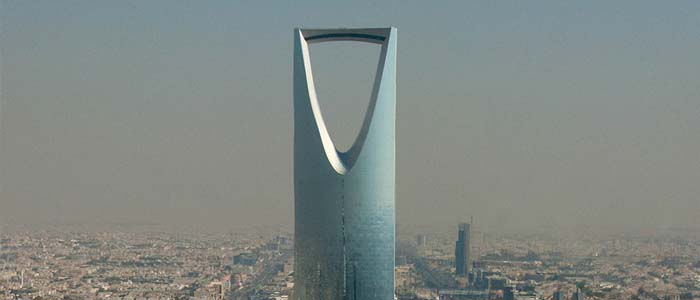
Saudi Arabia’s economy has come a long way since the Vision 2030 reform agenda was launched in 2016.
Since then, the kingdom has made measurable progress in reducing structural reliance on hydrocarbons, according to the International Monetary Fund (IMF), which added that reforms across multiple sectors have improved overall economic performance with notable progress in governance, business regulations, capital markets, labour market, and the external sector.
“The reform agenda has also supported private sector development by encouraging the creation of new firms, expanding credit, and facilitating foreign investment in capital markets,” the IMF noted.
Since launching the programme, Saudi Arabia’s economy has become less dependent on oil, with non-oil sectors expanding steadily. Non-oil activities now account for a growing share of the GDP – estimated at over 50% in recent years, reflecting a structural shift in the country’s economic composition.
STRUCTURAL REFORM
Regulatory reform has especially translated into tangible improvements in the business environment. Since 2016, Saudi Arabia has streamlined licensing, strengthened commercial laws, and enhanced governance frameworks, factors that have supported higher private-sector activity.
Financial sector development has been another key pillar. Capital markets have expanded in size, accessibility, and sophistication, improving capital allocation across the economy. The Saudi Exchange's market cap soared from USD 449 billion in 2016 to USD 2.35 trillion by the end of 2025, an astonishing rise in valuation and capital depth. Various reforms to develop domestic equity markets (e.g., creating a parallel equity market for small companies “Nomu”), domestic debt and credit markets, and the government securities market have also boosted investor sentiment and market depth. Additionally, measures designed to improve SMEs’ access to finance, as well as foreign investors’ access to domestic capital markets are helping lift financial flows.
Labour markets also provide clear evidence of improvement, notably for women. “Between 2017 and 2024, female participation nearly doubled, from 18% to almost 36%, driven by sustained e orts under programmes such as the Human Capability Development Program and the National Transformation Program.”
Over the same period, the unemployment rate for Saudi women fell dramatically from 32% to 13% (2024 average) and 11.9% (Q4/2024), while the rate for Saudi men declined more gradually, from 7% to 4%, both resulting in record-low levels of unemployment.
UPBEAT BUSINESSES
Business sentiment indicators in February reinforced the continued growth momentum. The Business Confidence Index (BCI) published by GASTAT remained at an elevated level of 60.6 points in February, although easing from 61.6 points in January. The BCI remains above the neutral level of 50 in early 2026, signalling that firms generally expect expansion in production, sales, and employment in the coming months.
The decrease is attributed to a decline in confidence levels related to input costs for the current month and expected inputs for the coming month, according to index data.
The Short-Term Business Indicator also points to strong growth being registered by the private sector.
As part of the index, the country’s Operating Revenues Index increased by 2.7% year on year in December 2025, compared with the same month in 2024, according to the latest data available. On a monthly basis, the index rose 0.5% from November 2025, indicating modest sequential growth.
The annual increase was supported by gains across several sectors. Wholesale and retail trade, including motor vehicle repair, grew by 9.9%, while construction activity expanded by 8.1%. Stronger performance was also recorded in financial and insurance services, which rose by 14.8%, and information and communication activities, which increased by 11.6%. Manufacturing activity also contributed to the overall rise, with a 0.3% increase year on year.
Building activity also strengthened during the month, with the number of building permits issued rising by 18.3% year on year in December, reaching 9,452, compared with 7,992 during the same period in 2024.
Overall, the data point to moderate growth in business revenues across several sectors, alongside a strong increase in construction permitting activity toward the end of 2025.
The latest business confidence and short-term business indicator readings suggest that Saudi Arabia’s economic expansion is increasingly supported by domestic sectors even as oil activity continues to influence overall volatility. The steady growth of non-oil industries driven by Vision 2030, combined with stable business sentiment, indicates that the kingdom’s broader economic base continues to expand alongside its traditional energy sector.

TRADE WITH INDIA
While energy remains the bedrock of their relationship, sectors like manufacturing, logistics, and technology have emerged as areas of interest.
SPECIAL ECONOMIC ZONES
Companies operating in four special economic zones are poised to benefit from tax exemptions, and simplified company formation, among others.
LOGISTICS
International investors are tapping into the country’s significant potential as a global trade and transport hub.
RENEWABLES
The kingdom’s utilities company emphasises the need to invest in projects that ensure a more sustainable, yet reliable, supply of electricity.

Your are now leaving this site
Your are now leaving this site
You are about to leave this site. You are being redirected to an external site. Would you like to leave this site?