Search
 Security Center
 ATM & Branches
RENEWABLES


How can we help?
Filter
Looks like we don’t have any matches for
Try a different search term or check out some of our suggestions below.

Frequently Asked Questions
Have questions about SAB banking services? Let us help you with these frequently asked questions.
FAQS
Customer Service
Our friendly Customer Support team are on hand to help with any queries you have. We're here to help!
Contact Us


RENEWABLES AT CORE OF SAUDI’S ENERGY TRANSFORMATION
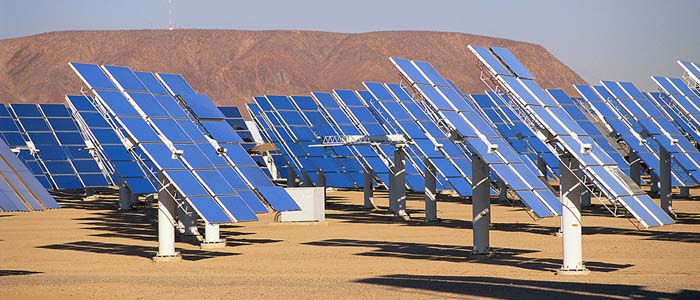
Saudi Energy, the kingdom’s pivotal electricity provider, is spearheading investments in renewable power and grid infrastructure, which will support a rapidly changing energy system.
The company, until recently known as Saudi Electricity Company, said it achieved its highest-ever operating revenues of SAR 102.2 billion in fiscal year 2025, while net profit rose 88.9% to SAR 12.98 billion.
The rebranding to Saudi Energy signals the company’s expanded role in enabling transformation in the energy sector, including developing energy-storage systems, integrating renewable generation, and supporting new technologies in the power system.
Saudi Energy’s strong performance comes as it expands its role beyond traditional electricity supply to become a broader energy system operator, responsible for integrating new renewable capacity, upgrading networks, and supporting the kingdom’s long-term energy transition.
One indicator of this shift is the company’s participation in new solar developments. During 2025, a consortium including Saudi Energy and EDF Renewables won the 600-megawatt (MW) Samtah solar project, part of the government’s expanding pipeline of renewable projects under the national energy strategy.
This is part of the government’s aim to generate 50% of the country’s electricity from renewable sources by 2030, while reducing reliance on oil-fired power plants and expanding natural gas and clean energy capacity.
UTILIZING SOLAR RESOURCES
The government increasingly sees solar and wind power as essential to conserving hydrocarbons for export and in reducing carbon emissions. The kingdom’s vast solar resources have made utility-scale photovoltaic projects a central pillar of the transition.
Large projects already illustrate the scale of that ambition. The Sudair Solar PV Project, for example, has a planned capacity of about 1.5 gigawatts (GW), making it one of the largest solar plants in the region, capable of powering roughly 185,000 homes.
“New, clean electricity will not only decarbonise the country’s grid, but it will also help to decarbonise the factories and transport systems of Europe and the Far East, by producing and exporting green hydrogen made from water and renewable electricity,” write Je rey Beyer, UNDP chief technical advisor to the Saudi Ministry of Energy, and Stephen Gitonga, regional energy specialist, UNDP Regional Hub for Arab States. “With the ambition to be a major player in artificial intelligence (AI) data centres, it will also help decarbonise AI and digital infrastructure.”
While many renewable projects are developed by independent power producers, Saudi Energy is playing a crucial role in connecting them to the national electricity system.
As the operator manages most of the kingdom’s transmission and distribution infrastructure, it is responsible for ensuring grid reliability while integrating intermittent sources such as solar and wind power. Expanding renewable capacity therefore requires significant upgrades to transmission networks, substations and digital control systems.
These investments are taking place as Saudi electricity demand continues to rise due to population growth, industrial expansion and the electricity requirements of major infrastructure projects tied to the country’s economic transformation plans.
The government expects power-generation capacity to increase significantly in the coming years as new cities, industrial zones, and large development projects expand electricity consumption across the kingdom.
Saudi Energy has simultaneously increased spending on grid infrastructure and power systems needed to support the growing share of renewable electricity. Modernising the network – through automation, advanced control systems, and expanded transmission capacity – proves critical for maintaining reliability as renewable penetration rises.
The company also tapped international capital markets to fund expansion. In January, it raised USD 2.4 billion through a sukuk issuance, part of a broader financing strategy to support infrastructure investment and balance sheet strength.
GOVERNMENT STEPS IN
The growth in renewable generation is also being driven by government procurement programmes. In recent years, Saudi authorities have awarded several large-scale renewable energy projects to international and regional developers, with new solar and wind facilities forming the backbone of future electricity capacity.
These developments form part of an e ort to build tens of gigawatts of clean-energy capacity across the country. The pipeline includes large solar parks, wind farms and energy-storage systems intended to stabilise the grid and manage variability in renewable generation.
Alongside these projects, Saudi Arabia is also investing in emerging technologies such as green hydrogen production, which relies on renewable electricity to produce zero-carbon fuels.
As the operator of the national electricity grid, Saudi Energy’s performance is closely tied to the broader transformation of the kingdom’s power sector. The company’s financial results highlight how rising electricity demand and renewable expansion are reshaping the role of utilities.

ECONOMY
A decade since this ambitious agenda was launched, the kingdom has already managed to project a stable and sustainable fiscal picture.
TRADE WITH INDIA
While energy remains the bedrock of their relationship, sectors like manufacturing, logistics, and technology have emerged as areas of interest.
SPECIAL ECONOMIC ZONES
Companies operating in four special economic zones are poised to benefit from tax exemptions, and simplified company formation, among others.
LOGISTICS
International investors are tapping into the country’s significant potential as a global trade and transport hub.

Your are now leaving this site
Your are now leaving this site
You are about to leave this site. You are being redirected to an external site. Would you like to leave this site?