Search
 Security Center
 ATM & Branches
SPECIAL ECONOMIC ZONES

How can we help?
Filter
Looks like we don’t have any matches for
Try a different search term or check out some of our suggestions below.

Frequently Asked Questions
Have questions about SAB banking services? Let us help you with these frequently asked questions.
FAQS
Customer Service
Our friendly Customer Support team are on hand to help with any queries you have. We're here to help!
Contact Us


SAUDI FINE-TUNES SEZ REGULATIONS TO LURE FOREIGN CAPITAL
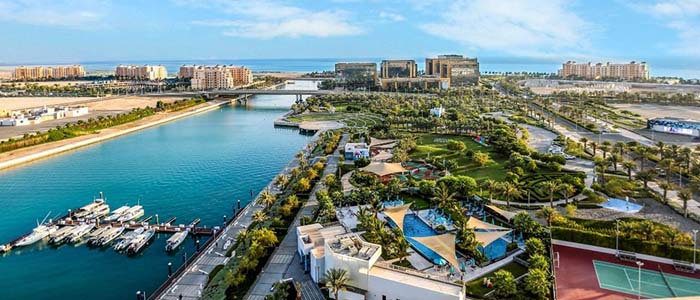
Saudi Arabia is preparing to introduce a new legal framework for companies operating in its special economic zones (SEZs), part of a broader e ort to attract foreign investment and develop industrial and technology clusters aligned with its economic diversification plans.
In January 2026, the Council of Ministers approved detailed regulations governing companies in four designated zones: King Abdullah Economic City, Ras Al-Khair SEZ, Jazan SEZ, and the Cloud Computing SEZ. The rules are scheduled to take e ect in April this year, 90 days after publication in the o cial gazette Umm Al-Qura.
The regulations establish a distinct corporate and regulatory regime for companies operating inside the zones. Among the most notable provisions is the exemption of qualifying SEZ entities from several national laws that normally govern businesses in mainland Saudi Arabia, including the Saudi Companies Law, the Commercial Register Law, and the Trade Names Law. The move signals an attempt by policymakers to create a more flexible regulatory environment intended to simplify company formation and improve the investment climate.
The SEZ initiative forms part of the broader transformation strategy outlined in Saudi Vision 2030, which aims to diversify the kingdom’s economy away from hydrocarbons while strengthening high-value sectors such as advanced manufacturing, logistics, and digital technology. Saudi Arabia has experimented with economic cities and free-zone-style projects in the past, but the new regulatory framework provides a clearer legal structure and targeted incentives for companies operating within designated zones.
UNLOCKING OPPORTUNITIES
Three of the zones are location-based industrial clusters designed to leverage regional economic strengths. The SEZ at King Abdullah Economic City, located on the Red Sea coast, is expected to focus on sectors including automotive supply chains and assembly, ICT and electronics manufacturing, pharmaceuticals, medical technology, logistics, and consumer goods.
The zone at Ras Al-Khair in the Eastern Province is intended to support maritime industries such as shipbuilding, o shore platform services, and maintenance, repair and operations for rigs and vessels. Meanwhile, the Jazan SEZ in southern Saudi Arabia is being developed around food processing, metals conversion, and logistics activities.
The fourth zone follows a di erent model. The Cloud Computing SEZ is designed to support the development of data centres and digital infrastructure across the kingdom. Unlike the geographically fixed industrial zones, companies licenced under the cloud computing regime can operate data centres anywhere in Saudi Arabia while still benefiting from SEZ incentives. To qualify, however, participating companies must maintain their regional headquarters in Riyadh.
Access to SEZ incentives will require companies to obtain licences from authorities responsible for each zone and to conduct approved economic activities within the designated sectors. Detailed licensing procedures and eligibility requirements are expected to be issued by the relevant regulatory bodies overseeing the zones.
A central feature of the framework is a package of fiscal incentives aimed at improving the attractiveness of the zones for international investors. Corporate income tax will continue to apply under Saudi tax legislation, but certain exemptions and incentives may be available depending on the type of activity carried out. Companies operating in the sector-specific zones will be excluded from the scope of zakat regulations, which apply to some domestic entities, potentially lowering the fiscal burden for qualifying investors.
TAX ADVANTAGES
Additional measures include exemptions from withholding taxes for licenced SEZ entities and the suspension of customs duties on eligible goods imported under approved customs suspension regimes. The treatment of value-added tax will also di er from that of mainland companies. In many cases, goods transferred within a zone, moved between zones, or imported from mainland Saudi Arabia into an SEZ may qualify for a zero-per-cent VAT rate if certain conditions are met. Goods imported directly from outside the country into an SEZ may, in some instances, fall outside the scope of VAT altogether.
The Cloud Computing SEZ follows a similar tax structure. Licenced companies will remain subject to corporate income tax but will also be exempt from zakat regulations. Additional incentives linked to investment in digital infrastructure and data-centre operations may be introduced through specific licensing guidelines.
Beyond tax advantages, the new framework also introduces more flexible governance arrangements for companies operating inside the zones. By operating outside several standard corporate laws, SEZ entities are expected to benefit from streamlined administrative procedures and simplified regulatory requirements.
With the new regulations scheduled to take e ect in April 2026, the SEZ framework is poised to become a key element of the country’s evolving investment landscape. The model is set to position the kingdom as a regional hub for manufacturing, logistics and digital services, while reinforcing its broader ambitions to grow the private sector.

ECONOMY
A decade since this ambitious agenda was launched, the kingdom has already managed to project a stable and sustainable fiscal picture.
TRADE WITH INDIA
While energy remains the bedrock of their relationship, sectors like manufacturing, logistics, and technology have emerged as areas of interest.
LOGISTICS
International investors are tapping into the country’s significant potential as a global trade and transport hub.
RENEWABLES
The kingdom’s utilities company emphasises the need to invest in projects that ensure a more sustainable, yet reliable, supply of electricity.

Your are now leaving this site
Your are now leaving this site
You are about to leave this site. You are being redirected to an external site. Would you like to leave this site?