Search
 Security Center
 ATM & Branches
TRADE WITH INDIA


How can we help?
Filter
Looks like we don’t have any matches for
Try a different search term or check out some of our suggestions below.

Frequently Asked Questions
Have questions about SAB banking services? Let us help you with these frequently asked questions.
FAQS
Customer Service
Our friendly Customer Support team are on hand to help with any queries you have. We're here to help!
Contact Us


SAUDI AND INDIA RAMP UP DEALS IN BID TO DEEPEN TRADE TIES
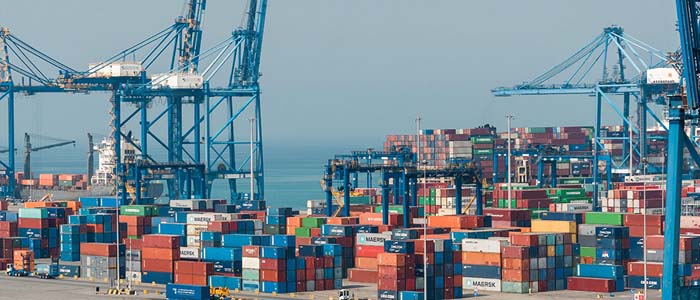
Saudi Arabia and India are exploring way to expand trade, investment, and industrial cooperation across energy, manufacturing, and logistics sectors.
Recent discussions between o cials and business leaders from Gulf Cooperation Council (GCC) nations and India focused on strengthening commercial ties and discovering new opportunities for bilateral trade and investment. The talks form part of broader e orts to develop the economic dimension of the Saudi-Indian strategic partnership, which has grown steadily in recent years.
The two countries already maintain one of the most significant trade relationships linking the Middle East and South Asia. Bilateral trade reached approximately SAR 154 billion in 2025, according to preliminary data from the General Authority for Statistics (GASTAT). Saudi Arabia is among India’s top five largest trading partner while the South Asian country is one of the kingdom’s top global trading partners.
Energy remains the cornerstone of their relationship. Saudi Arabia is a major supplier of crude oil and liquefied petroleum gas (LPG) to India, which relies heavily on imports to meet its growing energy demand. In the 2024-2025 financial year, India imported 33.14 million metric tonnes (mmt) of crude oil, accounting for 13.58% of its total crude imports, according to the Indian Embassy in Riyadh. India also imported 3.34 mmt of LPG from Saudi Arabia, which was 14.99% of its total LPG imports during the period.
However, the economic partnership has increasingly broadened beyond hydrocarbons. Both sides are exploring cooperation in petrochemicals, renewable energy, infrastructure, digital technology, and advanced manufacturing. Joint investment initiatives are also under discussion, including plans for new refinery projects in India and collaboration in clean energy technologies.
NON-HYDROCARBON TIES
Economic ties between India and Saudi Arabia continue to boost investment flows across sectors ranging from infrastructure and technology to agriculture and manufacturing.
Indian investments in Saudi Arabia are estimated at around USD 3 billion, with 2,923 licenses issued to Indian companies, according to most recent data. Indian firms are active across a wide range of industries including construction, consultancy services, telecommunications, information technology, financial services, pharmaceuticals, and software development.
Saudi investment in India is also growing. Total Saudi investments, including those from the Public Investment Fund (PIF) and other Saudi companies, are estimated at about USD 10 billion, according to the Indian Embassy. Notable investments include PIF’s stakes in Reliance Jio Platforms and Reliance Retail Ventures. The PIF-owned Saudi Agricultural and Livestock Investment Company has also acquired stakes in LT Foods Limited, the producer of Daawat rice, strengthening cooperation in food security and agricultural supply chains.
MULTI-SECTOR INVESTMENTS
Other Saudi firms are active across multiple sectors. SABIC operates a technology and innovation centre in Bengaluru, while Alfanar has invested roughly USD 700 million in solar and wind energy projects in the Indian states of Gujarat and Rajasthan. The group has also secured smart-metering projects in Madhya Pradesh. Meanwhile, Abdul Latif Jameel has injected a USD 150 million capital into electric-vehicle manufacturer Greaves Electric Mobility, while Petromin Corporation is partnering with Hindustan Petroleum Corporation Limited to establish around 1,000 vehicle service centres across India.
Trade links extend beyond investment. India exports automobiles, textiles and pharmaceuticals to Saudi Arabia, while cooperation in agriculture and food security is expanding through joint investments and trade exhibitions. Indian pharmaceutical firms such as Aurobindo Pharma and Glenmark Pharmaceuticals, are increasing their presence in the kingdom’s healthcare market, which is valued at around USD 7 billion to USD 8 billion.
Technology cooperation is another growing area, with Indian IT companies such as TCS, Wipro, and Tech Mahindra working with Saudi government entities and private firms on digital transformation initiatives.
The developments highlight the broadening scope of Saudi-Indian economic cooperation, with investment, trade, and technology partnerships increasingly complementing their long-standing energy relationship.
Trade diversification also reflects the two economies’ complementary nature. Saudi Arabia is a major producer of hydrocarbons and petrochemicals, while India has a rapidly expanding manufacturing sector and large domestic market. Policymakers in both countries have highlighted opportunities for cooperation across supply chains, particularly in chemicals, petrochemicals, and industrial production.
Another factor underpinning the relationship is the large Indian community living and working in Saudi Arabia. Around 2.7 million Indian nationals reside in the kingdom, forming one of the largest expatriate groups and contributing to economic ties through remittances and business connections.
Strategically, both countries also see trade cooperation as part of wider regional connectivity initiatives. Projects such as the proposed India-Middle East-Europe Economic Corridor aim to link South Asia with the Gulf and Europe through integrated transport and logistics networks, potentially boosting trade flows and cross-regional investment.

ECONOMY
A decade since this ambitious agenda was launched, the kingdom has already managed to project a stable and sustainable fiscal picture.
TRADE WITH INDIA SPECIAL ECONOMIC ZONES
Companies operating in four special economic zones are poised to benefit from tax exemptions, and simplified company formation, among others.
LOGISTICS
International investors are tapping into the country’s significant potential as a global trade and transport hub.
RENEWABLES
The kingdom’s utilities company emphasises the need to invest in projects that ensure a more sustainable, yet reliable, supply of electricity.

Your are now leaving this site
Your are now leaving this site
You are about to leave this site. You are being redirected to an external site. Would you like to leave this site?