Search
 Security Center
 ATM & Branches
ECONOMY

How can we help?
Filter
Looks like we don’t have any matches for
Try a different search term or check out some of our suggestions below.

Frequently Asked Questions
Have questions about SAB banking services? Let us help you with these frequently asked questions.
FAQS
Customer Service
Our friendly Customer Support team are on hand to help with any queries you have. We're here to help!
Contact Us


SAUDI BUILDS ECONOMIC RESILIENCE IN FACE OF HEADWINDS
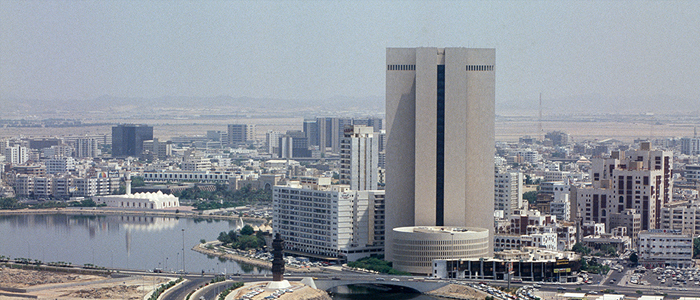
Saudi Arabia’s gross domestic product (GDP) rose 2.8% in the first quarter of 2026 compared to the same period last year, according to flash estimates by the General Authority for Statistics (GASTAT). The increase was broad-based with non-oil activities also rising by 2.8%, while oil activities recorded a 2.3% expansion and government activities posting a 1.5% year-on-year growth.
The kingdom’s first-quarter budget figures reflect the government’s pledge to prioritise development spending and economic resilience despite lower oil revenues.
INVESTMENT MAGNET
The economy’s diversification is also gaining traction among investors.
Real Gross Fixed Capital Formation (GFCF) in the non-government sector, i.e. private investment, recorded an annual growth rate of 4.6% by the first half of fiscal year 2025, according to latest data available from the Ministry of Finance. The increase was driven by a 5.2% rise in real GFCF in the non-oil sector. Net foreign direct investment (FDI) inflows reached SAR46.5 billion during the period, an annual growth of 29.2%.
“This reflects the sustained appeal of the Kingdom’s business environment to both domestic and international investors, alongside increasing confidence in the resilience and future outlook of the national economy,” the Ministry noted.
It also highlights the growing role of the private sector in boosting capital investment, which supports economic growth and enhances the productive capacity of the economy over the medium and long term.
It is reinforced by Saudi Arabia’s National Investment Strategy (NIS), which is emerging as a key driver of the Kingdom’s economic diversification agenda under Vision 2030. Designed to increase both the volume and quality of investment while expanding the role of the private sector, the strategy has delivered strong results across several indicators. According to government data, foreign investment has generated more than 105,000 jobs for Saudi nationals through the third quarter of 2025, bringing the cumulative total since the strategy’s launch to approximately 455,000 jobs.
The Saudi Authority for Industrial Cities and Technology Zones (MODON) posted a stellar performance in 2025, attracting foreign investments exceeding SAR 12 billion, a 100% increase over 2024, alongside SAR 18 billion in new local investments, bringing total investments to approximately SAR 30 billion, a 25% growth over the previous year.
Industrial investments led with SAR 22 billion (up 16%), followed by technical investments at over SAR 7 billion (up 140%), service sector investments at SAR 748 million (up 23%), and logistics at SAR 553 million (up 35%).
Developed land areas expanded to 236 million square metres (sqm), an 8% increase, while electricity capacity grew 12% to 8,959 megavolt-ampere (MVA), drinking water purification plants rose 13% to 34 facilities, and natural gas supply increased 37% to 195 million cubic feet per day.
The number of facilities within MODON's industrial cities reached 9,557, an 11% increase over 2024.
Saudi Arabia has also made significant progress in attracting multinational corporations. Since the launch of the regional headquarters program in 2021, 682 international companies have established regional headquarters in the kingdom, exceeding its target of attracting 500 firms. These gains have helped boost Saudi Arabia’s global competitiveness rankings, reinforcing its position as an increasingly attractive destination for international investment.
Meanwhile, the Business Confidence Index (BCI) in Saudi Arabia reached 54.5 points in April, increasing by 2.4 points from 52.1 points in March 2026. The rise reflects continued optimism in the business sector, supported by confidence in the stability of economic activity and sustained growth across multiple sectors, according to the GASTAT.
For industry, the BCI hit an optimistic level of 53.5 points in April, up 2.7 points from 50.8 points in March. The rise was driven by stronger confidence among industrial establishments, particularly regarding expectations for overall performance, sales, and purchase orders.
Meanwhile, the construction sector’s BCI soared to 55.7 points, an increase of 2.7 points from the previous month’s 53.0 points.
The BCI for the services sector also expanded to reach 53.9 points, up 1.9 points from 52.0 points in March. The gain was supported by stronger optimism among establishments, particularly regarding expectations for overall performance, sales, and purchase orders.
BUSINESS OPERATING REVENUES RISE
This was evident in businesses’ Operating Revenues Index (ORI), assembled by GASTAT. The index rose 5.9% year on year in February, supported by a 19% increase in information and communication, a 6.5% surge in mining and quarrying activities, and a 17% jump in transportation and storage, among others.
On a monthly basis, the ORI increased by 0.3% supported by a 0.4% uptick in manufacturing activities and a 0.8% expansion in mining and quarrying activities. In addition, activities surrounding wholesale and retail trade and repair of motor vehicles posted a 0.6% gain, while construction saw a 0.5% increase as financial and insurance expanded 1.4%, according to GASTAT.
Notably, the Employees Compensation Index (ECI) recorded an annual increase of 9.8%, supported by a surge in activities involving manufacturing (9.9%), construction (7.6%), wholesale and retail trade and repair of motor vehicles and motorcycle (10.3%), mining and quarrying (1.1%), and financial and insurance (14%).

TRADE WITH EUROPE
The partners are collaborating on several areas including green hydrogen, critical raw materials, pharmaceuticals, and transformative technologies.
GAMING
The industry is seen as one of the crucial components of the kingdom’s bold strategy to diversify its economy.
PIF
Under the five-year plan, PIF aims to raise strategic sectors’ competitiveness, optimise returns on assets, and unlock global investment opportunities.
RENEWABLES
As its renewable energy capacity is poised to increase, the country looks to battery storage systems in ensuring a steady supply of electricity.

Your are now leaving this site
Your are now leaving this site
You are about to leave this site. You are being redirected to an external site. Would you like to leave this site?