Search
 Security Center
 ATM & Branches
TRADE WITH EUROPE

How can we help?
Filter
Looks like we don’t have any matches for
Try a different search term or check out some of our suggestions below.

Frequently Asked Questions
Have questions about SAB banking services? Let us help you with these frequently asked questions.
FAQS
Customer Service
Our friendly Customer Support team are on hand to help with any queries you have. We're here to help!
Contact Us


SAUDI AND EUROPE FORGE STRONGER TRADE TIES BEYOND OIL
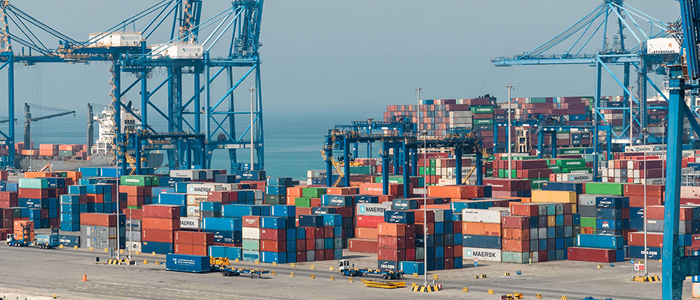
After Asia, Saudi Arabia’s biggest trading partner is Europe. The kingdom imported goods from the continent valued at SAR 61.3 billion in the fourth quarter of 2025, and exported just over SAR 33.7 billion during the period, according to latest available data from the General Authority for Statistics (GASTAT).
More than 2,500 European companies operate in kingdom, and that is set to expand as both look to forge closer trade ties in a changing geopolitical landscape.
Apart from energy security, the two partners are looking to collaborate on transformative technologies such as artificial intelligence (AI), quantum computing, biotechnologies, and critical minerals, which are the building blocks for new economic sectors.
In January, Riyadh hosted the first ever EU-Saudi roundtable on critical raw materials. It is part of ResourceEU, the EU’s new strategic action plan. Launched in late 2025, ResourceEU’s goal is to secure a reliable supply of critical raw materials like lithium, rare earths, and cobalt, reducing dependency on single suppliers, by boosting domestic extraction, processing, recycling, stockpiling, and strategic partnerships with resource-rich nations, such as Saudi Arabia.
GERMANY LEADS THE WAY
Germany – the continent’s largest economy – was Saudi Arabia’s biggest source of imports from Europe, and fourth largest overall, during the period with SAR 11.5 billion, led by machinery and metals, and vehicles. It was followed by Italy, France, Switzerland, and the United Kingdom. Within the EU, excluding Switzerland and the UK, bilateral trade stood at around SAR 75 billion in the fourth quarter, data shows.
In February, Germany and Saudi Arabia deepened their energy cooperation with a memorandum of understanding that focuses on areas including hydrogen, carbon management, energy e ciency, digitalisation, and resilient energy supply chains.
The agreement builds on an earlier 2021 hydrogen cooperation framework and reflects Europe’s growing search for stable long-term clean energy suppliers following years of energy market volatility and geopolitical disruption. Germany increasingly sees imported green hydrogen as essential to decarbonising heavy industries that are di cult to electrify directly, including steel, chemicals, and industrial manufacturing.
Alongside the government agreement, German energy firms EnBW and VNG signed a deal with Saudi Arabia’s ACWA Power to establish what the companies described as a “green ammonia export corridor” between the two countries. Under the arrangement, green hydrogen produced in Saudi Arabia using renewable electricity would be converted into ammonia for shipment to Germany through the port of Rostock before being reconverted for industrial use or electricity generation.
Saudi Arabia is increasingly positioning itself as a future exporter of green hydrogen, leveraging its abundant solar and wind resources, large-scale renewable energy projects and existing energy infrastructure.
For Germany, the partnership reflects a broader strategy to diversify energy imports and reduce reliance on a narrow group of suppliers. While hydrogen infrastructure and demand remain in early stages, policymakers increasingly view Gulf partnerships as part of Europe’s long-term industrial decarbonisation strategy.
BRITAIN EYES SAUDI OPPORTUNITIES
Meanwhile, British companies are also looking for new opportunities in the kingdom, especially as it expands its transportation infrastructure.
“The kingdom is investing heavily in port modernisation, digital infrastructure, naval capability and coastal development,” according to the Saudi-British Joint Business Council. Major upgrades at Jeddah Islamic and King Abdullah ports, alongside the development of new economic zones and tourism destinations such as NEOM and Red Sea Global, are reshaping the maritime landscape.
“At the same time, the sector is integrating advanced technologies including AI, automation and smart systems, alongside an increasing emphasis on environmental sustainability,” the joint council noted.
In February, Saudi Arabia also discussed with European partners such as France and Belgium more cooperation opportunities in pharmaceuticals, trade, and critical minerals. In France, Saudi o cials met with French business leaders to discuss areas of joint collaboration to reinforce the kingdom’s position as a key partner in supporting economic security and integrating global supply chains, ensuring the smooth flow of international trade and securing supplies of critical minerals worldwide.

GAMING
The industry is seen as one of the crucial components of the kingdom’s bold strategy to diversify its economy.
PIF
Under the five-year plan, PIF aims to raise strategic sectors’ competitiveness, optimise returns on assets, and unlock global investment opportunities.
RENEWABLES
As its renewable energy capacity is poised to increase, the country looks to battery storage systems in ensuring a steady supply of electricity.

Your are now leaving this site
Your are now leaving this site
You are about to leave this site. You are being redirected to an external site. Would you like to leave this site?