Search
 Security Center
 ATM & Branches
RENEWABLES

How can we help?
Filter
Looks like we don’t have any matches for
Try a different search term or check out some of our suggestions below.

Frequently Asked Questions
Have questions about SAB banking services? Let us help you with these frequently asked questions.
FAQS
Customer Service
Our friendly Customer Support team are on hand to help with any queries you have. We're here to help!
Contact Us


SAUDI ADVANCES CLEAN ENERGY’S GRID RELIABILITY
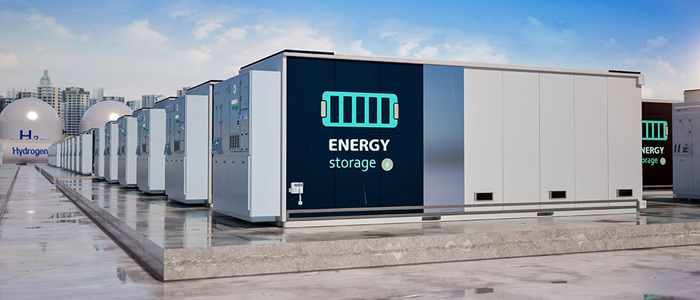
Saudi Arabia is laying the foundations for a more flexible power system. The launch of a second wave of battery energy storage system (BESS) projects by the Saudi Power Procurement Company, acting as principal buyer under the Ministry of Energy, is a signal that storage is moving from pilot phase to system-critical infrastructure, which would advance power resiliency in the country.
The latest programme comprising six projects, each at 500 megawatts (MW) with four-hour duration, adds up to 3,000 MW and 12,000 megawatt-hour (MWh) of dispatchable capacity, spread across key regions including Qassim, Makkah, Madinah and the Eastern Province.
Structured under a build-own-operate (BOO) model, with private developers holding full equity in project special purpose vehicles (SPVs) and contracting through long-term storage services agreements, the framework mirrors the kingdom’s broader independent power producer model. It is designed to crowd in capital while preserving centralised system planning.
But the strategic importance of BESS extends beyond procurement architecture. As Saudi Arabia accelerates renewable deployment under the National Renewable Energy Program, intermittency is becoming a key constraint. Solar and wind capacity can be built rapidly, but without storage, their contribution to grid reliability remains limited. Battery systems solve this mismatch by time-shifting generation – capturing excess solar output during the day and discharging it during evening peak demand.
In a system historically anchored in oil- and gas-fired baseload generation, the flexibility is critical. Storage reduces reliance on peaking plants, improves load balancing, and enhances grid stability in the face of demand volatility and extreme weather conditions. It also enables higher renewable penetration without compromising system security, a prerequisite for achieving the kingdom’s target of roughly 50% renewable capacity by 2030.
More broadly, the scale and geographic dispersion of these projects indicate that storage is being integrated as a core planning variable rather than an ancillary add-on.
ENERGY TRANSITION
Saudi Energy’s 2025 results underscore its focus on renewable energy. Revenues rose 15.3% to SAR 102.2 billion while net profit nearly doubled to SAR 12.98 billion, reflecting rising electricity demand, expansion of its asset base, and improved operational e ciency. It also highlights the alignment of grid investment and generation capacity with the kingdom’s long-term clean energy ambitions.
Saudi Energy, formerly known as Saudi Electricity, is the central enabler of Saudi Arabia’s energy transition under Vision 2030. By the end of 2025, 12.3 gigawatts (GW) of renewable capacity had been connected to the grid, supported by significant upgrades in transmission and distribution infrastructure designed to accommodate intermittent generation. This is complemented by the commissioning of 8 gigawatt-hour (GWh) of battery energy storage, with a further 14 GWh in development – an essential step in ensuring system flexibility and reliability as renewable penetration increases.
Saudi Energy’s generation pipeline, totalling approximately 24 GW, reflects a dual-track strategy: scaling renewables while optimising conventional assets.
The awarding of the 600 MW Samtah solar project, alongside ongoing fuel conversion from liquid fuels to natural gas, signals a gradual decarbonisation of the generation mix. At the same time, grid automation, now exceeding 40%, and improved reliability metrics point to a system being modernised for complexity and scale.
GREEN BUILDINGS
In 2025, the kingdom’s green building sector reached a key milestone. Saudi Arabia emerged as a regional leader, achieving the highest performance score of 76.31 points and registering over 1.03 million square meters of certified areas, according to the Saudi Green Building Forum.
The shift is supported by a robust professional network of over 7,300 registered experts and a cumulative portfolio of 6,662 projects, which together reduce CO2 emissions by approximately 62,800 tonnes annually.
The step-change is driven by integrating renewable energy, clean water, and eco-friendly infrastructure, serving as a sustainable bridge toward the goals of Vision 2030.
The kingdom is extending its green real estate to factories. In April, the Environment Fund launched the first phase of the “Green Factory” initiative, in cooperation with the National Center for Environmental Compliance and implemented by the Saudi Industrial Exporters Association, as part of the “Incentives and Grants” programme.
The phase includes field visits to participating factories in Riyadh, Jeddah, Hail, and Eastern regions to review workflow plans, assess environmental gaps, and develop solutions to enhance e fficiency..
The initiative aims to enable 50 factories to improve environmental performance, create added value that boosts production e ciency, and enhance the global competitiveness of national industry, in line with the kingdom’s environmental and economic sustainability goals.

TRADE WITH EUROPE
The partners are collaborating on several areas including green hydrogen, critical raw materials, pharmaceuticals, and transformative technologies.
GAMING
The industry is seen as one of the crucial components of the kingdom’s bold strategy to diversify its economy.
PIF
Under the five-year plan, PIF aims to raise strategic sectors’ competitiveness, optimise returns on assets, and unlock global investment opportunities.

Your are now leaving this site
Your are now leaving this site
You are about to leave this site. You are being redirected to an external site. Would you like to leave this site?