Search
 Security Center
 ATM & Branches
ECONOMY
Major indicators including business sentiment, foreign direct investment, and employment have been favourable, fuelling optimism for the country.
Find out more


Have questions about SAB banking services? Let us help you with these frequently asked questions.
FAQS
Our friendly Customer Support team are on hand to help with any queries you have. We're here to help!
Contact UsQuick Links

Major indicators including business sentiment, foreign direct investment, and employment have been favourable, fuelling optimism for the country.
Find out more
Ongoing investments in health innovation and pharmaceuticals have made a profound impact on people’s quality of life in the kingdom.
Find out more
Foreign investors are transforming the investment landscape in the country’s manufacturing industry, even benefiting SME players.
Find out more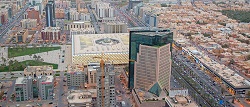
Expanding the pool of eligible buyers will increase demand for properties across the country’s major cities, especially in urban districts.
Find out more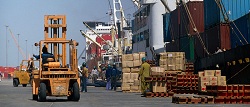
The nations are focusing on a more integrated economic engagement involving sectors like energy, technology, healthcare, aerospace, and infrastructure.
Find out more

IN THIS EDITION
Saudi Arabia Railways announced in April the launch of five new freight logistics corridors, marking a step further in its e orts to improve supply chain e ciency and strengthen integration across di erent modes of transport.
The initiative is designed to support both regional and international trade flows, aligning with the objectives of the National Transport and Logistics Strategy and Saudi Vision 2030. At a time of shifting global supply chains, the move reinforces the kingdom’s ambition to position itself as a global logistics hub.
The new corridors form part of an integrated logistics network linking Arabian Gulf ports with the central and northern regions of Saudi Arabia, and extending to Red Sea ports. Built on a multi-modal system combining rail and road transport, the network is intended to streamline cargo movement, improve route e ciency, and enhance overall supply chain fluidity.
The development reflects strong government backing in advancing the railway sector. The new corridors represent comprehensive logistics o ering, designed to improve reliability and e ciency through closer coordination between transport modes and relevant authorities.
The corridors are also expected to support the movement of a wide range of goods, strengthening national supply chains and key industries, particularly petrochemicals and mining. They will also facilitate export and import flows, while providing more efficient transit solutions for regional trade.
Saudi Arabia Railways network serves a broad customer base, including major industrial players, mining companies, and global shipping lines. Operations are anchored by an integrated system that includes the Riyadh Dry Port and freight yards across Dammam, Jubail, Ras Al-Khair, Al-Kharj, Hail, and Qurayyat, creating stronger links between ports and industrial centres across the kingdom.
Beyond e ciency gains, the corridors are expected to deliver wider economic and environmental benefits. By shifting freight from road to rail, they could eliminate thousands of truck journeys, improve road safety, and reduce carbon emissions. At the same time, faster transit times and improved operational performance are likely to enhance the competitiveness of Saudi Arabia’s logistics sector.
More broadly, the corridors strengthen the kingdom’s connectivity with regional and global markets, reinforcing its role as a key trade bridge between east and west.

You are about to leave this site. You are being redirected to an external site. Would you like to leave this site?