Search
 Security Center
 ATM & Branches
US-SAUDI TRADE

How can we help?
Filter
Looks like we don’t have any matches for
Try a different search term or check out some of our suggestions below.

Frequently Asked Questions
Have questions about SAB banking services? Let us help you with these frequently asked questions.
FAQS
Customer Service
Our friendly Customer Support team are on hand to help with any queries you have. We're here to help!
Contact Us


SAUDI AND US TO SEE STRONGER TRADE AND INVESTMENT FLOWS
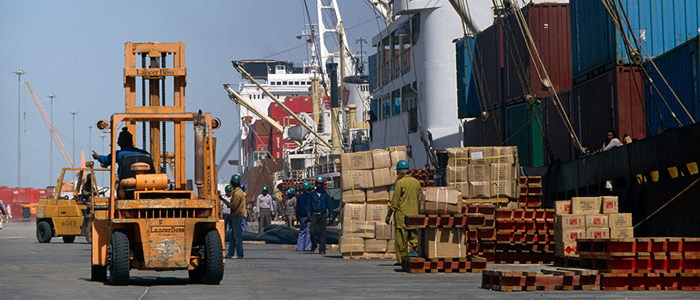
Recent agreements between the United States and Saudi Arabia point to a broad-based deepening of economic and strategic ties, spanning defence, energy, technology, and industrial investment. Taken together, the deals signal not just headline-grabbing figures, but a more structured alignment across key sectors of both economies.
The US is among Saudi Arabia’s major trading partners with exports of SAR 48.7 billion in 2025, according to quarterly data from the General Authority for Statistics (GASTAT). Meanwhile, the US was also a major source of imports for the kingdom, with shipments of just over SAR 79 billion received, generating SAR 127 billion in bilateral trade flows.
At the commercial level, the US Department of Commerce announced more than USD 20 billion in deals between American and Saudi firms, covering sectors such as energy, infrastructure, aerospace, healthcare, and technology. These agreements were facilitated through formal channels such as the US-Saudi Investment Forum, where government o cials and private sector leaders convened to advance bilateral business opportunities. The deals include energy supply arrangements, infrastructure contracts, and partnerships aimed at strengthening supply chains on both sides.
In parallel, Saudi Arabia has signalled intentions to invest heavily in the US, with commitments approaching USD 1 trillion across sectors including infrastructure, technology, and industry, although the timing and execution of these pledges remain uncertain.
A key feature of the current wave of cooperation is its sectoral breadth. In energy, agreements include liquefied natural gas (LNG) supply deals and joint investments aimed at strengthening long-term energy security for both countries. In parallel, Saudi Aramco signed preliminary agreements with US firms potentially exceeding USD 30 billion, targeting LNG, financial services, and advanced materials. These moves reflect Saudi Arabia’s strategy to diversify its energy portfolio while deepening its presence in global gas markets.
ECONOMIC ENGAGEMENT
Technology and innovation are also central to the partnership. Agreements include cooperation in artificial intelligence (AI), semiconductor access, and advanced computing infrastructure, positioning US firms as key partners in Saudi Arabia’s digital transformation ambitions. This includes frameworks that allow Saudi entities to access cutting-edge American technologies, while incorporating safeguards to manage security concerns and technology transfer risks.
At a structural level, the agreements suggest a shift toward more integrated economic engagement. Many of the deals are tied to long-term collaboration in supply chains, industrial development, and emerging technologies. This includes critical minerals frameworks, joint infrastructure development, and investment in future-facing sectors such as AI and clean energy.
The current round of US-Saudi agreements reflects a relationship that is both expanding and evolving. Commercial deals provide immediate economic impact, while larger strategic commitments point to a longer-term alignment across energy, technology, and security. The extent to which these agreements translate into tangible outcomes will depend on execution – but the direction of travel is clear: a more diversified and interdependent bilateral partnership.
FRESH DEALS
In recent months, companies from the two countries are building on the pledges. Saudi Aramco signed an agreement with Microsoft to advance the deployment of industrial AI, targeting e ciency gains, digital sovereignty, and workforce development.
The push is being reinforced by more private sector momentum: Sitecore is expanding AI deployments in the kingdom, while Rockwell Automation is supporting Lucid’s electric vehicle facility in King Abdullah Economic City with advanced industrial software. Investment flows are also tracking this shift, with Public Investment Fund (PIF)-backed Humain committing USD 3 billion to xAI, highlighting the kingdom’s interest in frontier technologies.
Emerging clean energy strategies are evolving. GameChange Solar secured a major contract for a 1.2-gigawatt (GW) solar project, while Nextpower Arabia – a joint venture between Nextpower and Abunayyan Holding – aims to scale solar deployment across the region. Complementing this, international capital is flowing into climate innovation, with a Saudi-backed investment supporting a US-based carbon conversion start-up focused on turning carbon dioxide (CO2) into usable materials.
Industrial and strategic capabilities are also being strengthened. Lockheed Martin has opened a software factory in Riyadh to localise advanced defence technologies. In mining, new partnerships are emerging to develop critical minerals processing, including rare earth refining and multi-metallic technologies. Meanwhile, financial and institutional infrastructure continues to deepen, with Moody’s establishing a regional headquarters in Riyadh and over 45 agreements signed to expand training and employment pathways.

ECONOMY
Major indicators including business sentiment, foreign direct investment, and employment have been favourable, fuelling optimism for the country.
HEALTHCARE
Ongoing investments in health innovation and pharmaceuticals have made a profound impact on people’s quality of life in the kingdom.
MANUFACTURING
Foreign investors are transforming the investment landscape in the country’s manufacturing industry, even benefiting SME players.
REAL ESTATE
Expanding the pool of eligible buyers will increase demand for properties across the country’s major cities, especially in urban districts.

Your are now leaving this site
Your are now leaving this site
You are about to leave this site. You are being redirected to an external site. Would you like to leave this site?