Search
 Security Center
 ATM & Branches
REAL ESTATE

How can we help?
Filter
Looks like we don’t have any matches for
Try a different search term or check out some of our suggestions below.

Frequently Asked Questions
Have questions about SAB banking services? Let us help you with these frequently asked questions.
FAQS
Customer Service
Our friendly Customer Support team are on hand to help with any queries you have. We're here to help!
Contact Us


SAUDI’S NEW REAL ESTATE RULES TO TRIGGER GROWTH MOMENTUM
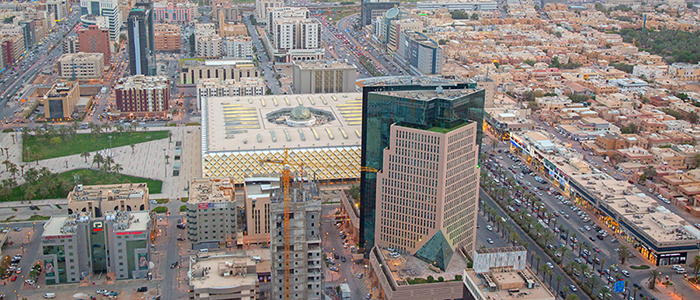
Saudi Arabia has taken a significant step in opening up its property market, a move that could reshape demand dynamics across its major cities. At the start of this year, international buyers – including non-Saudi individuals, companies, investment funds, and even non-profit organisations – were granted the right to own property in 170 designated areas across the kingdom. These zones include parts of Riyadh, Jeddah, Makkah, and Madinah, and are governed by specific conditions and registration requirements.
The reform has been long anticipated and is widely seen as a turning point. It expands the pool of eligible buyers to include overseas investors, diplomatic missions, international organisations, and Saudi firms with foreign shareholders. Even special purpose vehicles and funds with partial foreign ownership now qualify.
To guide implementation, the Real Estate General Authority (REGA) has outlined where ownership is permitted and under what terms. In cities like Riyadh and Jeddah, foreign ownership is allowed within defined urban zones, while in Makkah and Madinah it is restricted to Muslim buyers.
There are, however, clear guardrails. Transactions are subject to fees, including a transfer charge of up to 5% and a broader real estate levy of around 10%. Violations carry steep penalties – up to SAR 10 million – and properties acquired through misrepresentation can be forcibly sold at auction. These measures suggest the government is keen to attract foreign capital, but in a controlled and regulated way.
The approach closely mirrors other models, where designated investment zones were opened to international buyers. In those markets, a two-tier system emerged: areas open to foreign ownership saw faster price growth as international and domestic buyers competed for limited supply. A similar pattern could take shape in Saudi Arabia, particularly in high-demand urban districts.
STABILISING THE RENTAL MARKET
The policy comes as residential prices in cities like Riyadh have surged over recent years, in some cases outpacing income growth. Apartment prices in the capital, for example, have nearly doubled since 2019. While this reflects strong demand and economic expansion, it also strained a ordability.
In the near term, interest in Makkah and Madinah is expected to be driven more by cultural and religious motivations than by pure investment returns. Knight Frank’s survey suggest a large majority of wealthy Muslim investors globally aspire to own property in these cities. In contrast, demand in Riyadh and Jeddah is likely to come initially from long-term expatriates seeking to put down roots, especially now that ownership is no longer limited to personal use but extends to investment purposes.
Alongside ownership reforms, policymakers are also addressing pressures in the rental market particularly in Riyadh, where population growth has been rapid. Over the past five years, hundreds of thousands of Saudis have moved to the capital, joined by a growing expatriate workforce. This influx has driven rents sharply higher, in some areas by as much as 50%.
To stabilise the market, authorities introduced a five-year rent freeze in late 2025. Existing leases have been locked in at current rates, while new contracts must be agreed upfront with no escalation clauses. All agreements are required to be registered through the Ejar platform, bringing greater transparency and oversight.
In the short term, the rent cap is expected to curb speculative behaviour and cool investor appetite, particularly among those focused on rental yields. Over time, however, it should ease a ordability pressures, especially for younger Saudis and first-time buyers who have struggled with rising housing costs.
WHITE LAND TAX
At the same time, supply-side measures are being rolled out. Higher taxes on undeveloped urban land (known as the White Land Tax) are pushing landowners to either develop or sell idle plots. This is particularly relevant in major cities, where land is often tied up in complex family ownership structures. The government is working to expand land availability and encourage more a ordable development. Initiatives such as releasing serviced land at lower price points are already influencing buyer behaviour, with some households opting to build their own homes rather than purchase from developers.
Taken together, these reforms – opening the market to foreign buyers, stabilising rents, and increasing land supply – reflect a coordinated e ort to rebalance Saudi Arabia’s housing market.

ECONOMY
Major indicators including business sentiment, foreign direct investment, and employment have been favourable, fuelling optimism for the country.
HEALTHCARE
Ongoing investments in health innovation and pharmaceuticals have made a profound impact on people’s quality of life in the kingdom.
MANUFACTURING
Foreign investors are transforming the investment landscape in the country’s manufacturing industry, even benefiting SME players.
US-SAUDI TRADE
The nations are focusing on a more integrated economic engagement involving sectors like energy, technology, healthcare, aerospace, and infrastructure.

Your are now leaving this site
Your are now leaving this site
You are about to leave this site. You are being redirected to an external site. Would you like to leave this site?